
Background & context
Enhancing Course Access and Revenue
How might we help students find valuable online courses and purchase them easily while also enabling teachers to effectively present their courses and earn revenue?
My role
Owning the end-to-end design process
As the product designer, I was responsible for defining and refining the user experience and interface.
My role encompassed a comprehensive understanding of the distinct needs of expectant mothers and caregivers, conducting exhaustive user research, and translating these insights into sophisticated design solutions. From meticulously crafting user personas to developing wireframes and high-fidelity interfaces, my collaboration with the development team ensured the precise implementation of the envisioned user experience. Furthermore, I spearheaded the assessment of project success, utilizing metrics and user feedback to inform iterative adjustments, thereby perpetually enhancing the overall user experience of the application.
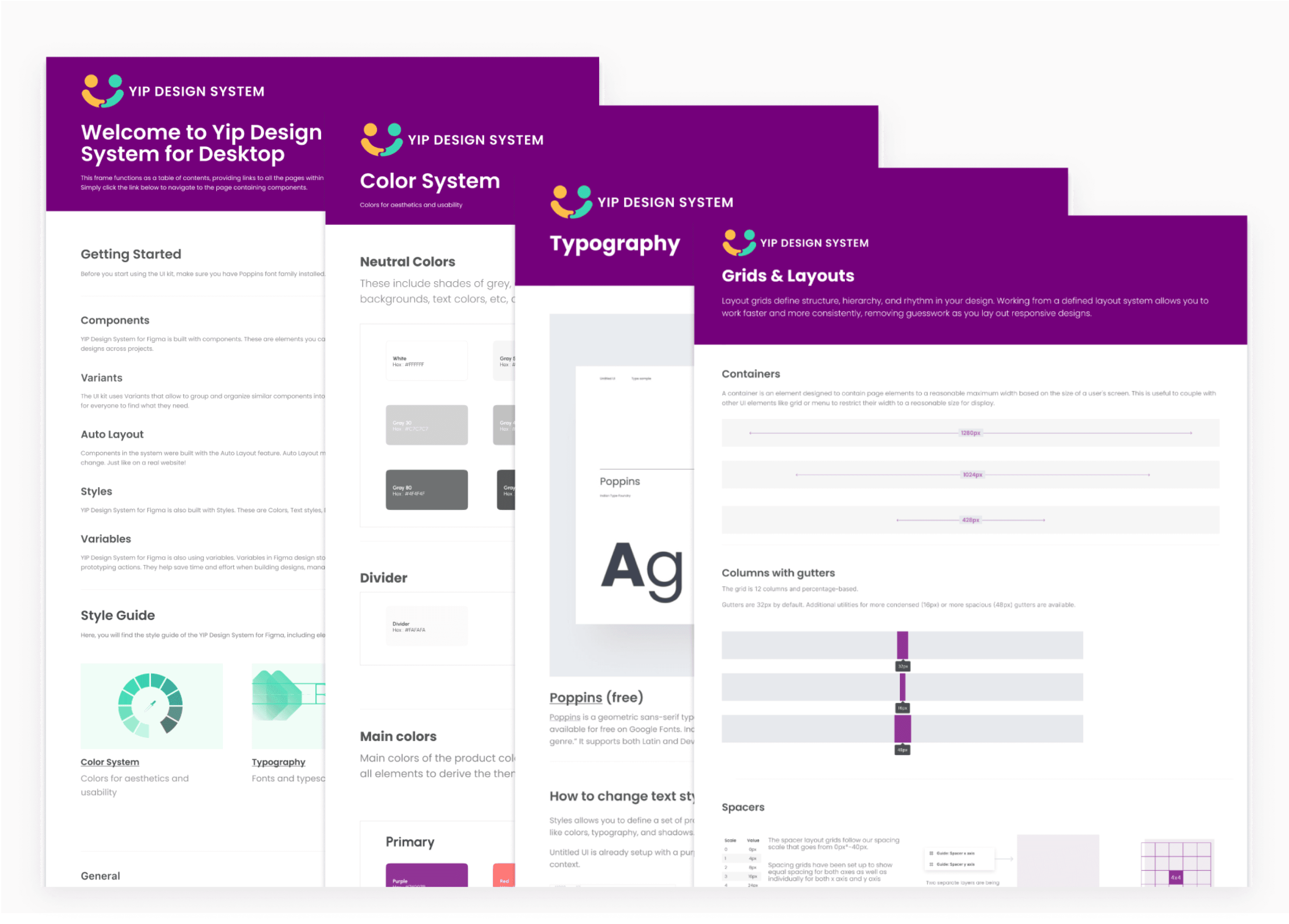
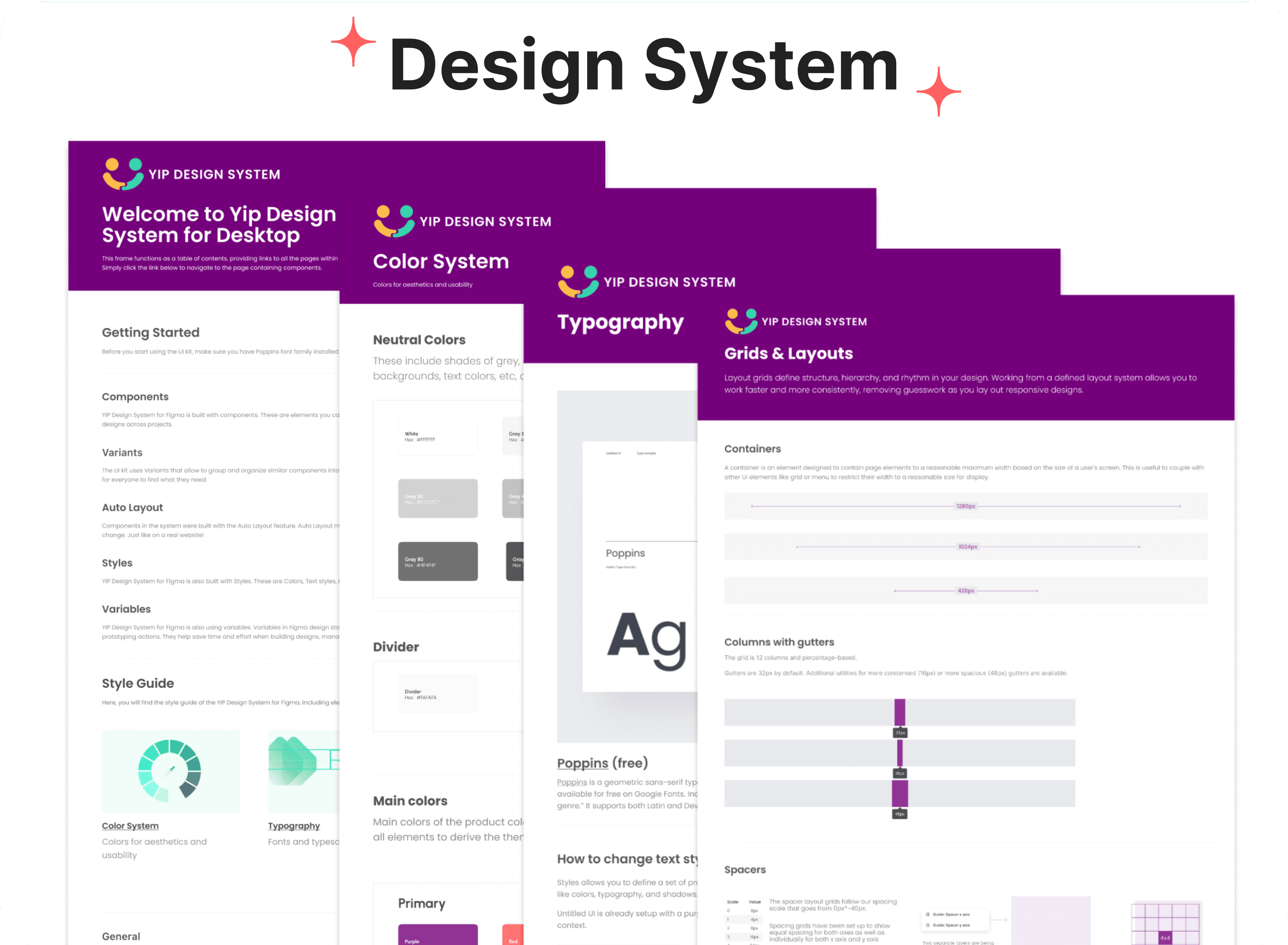
Design Toolkit

Problem statement
Problems:
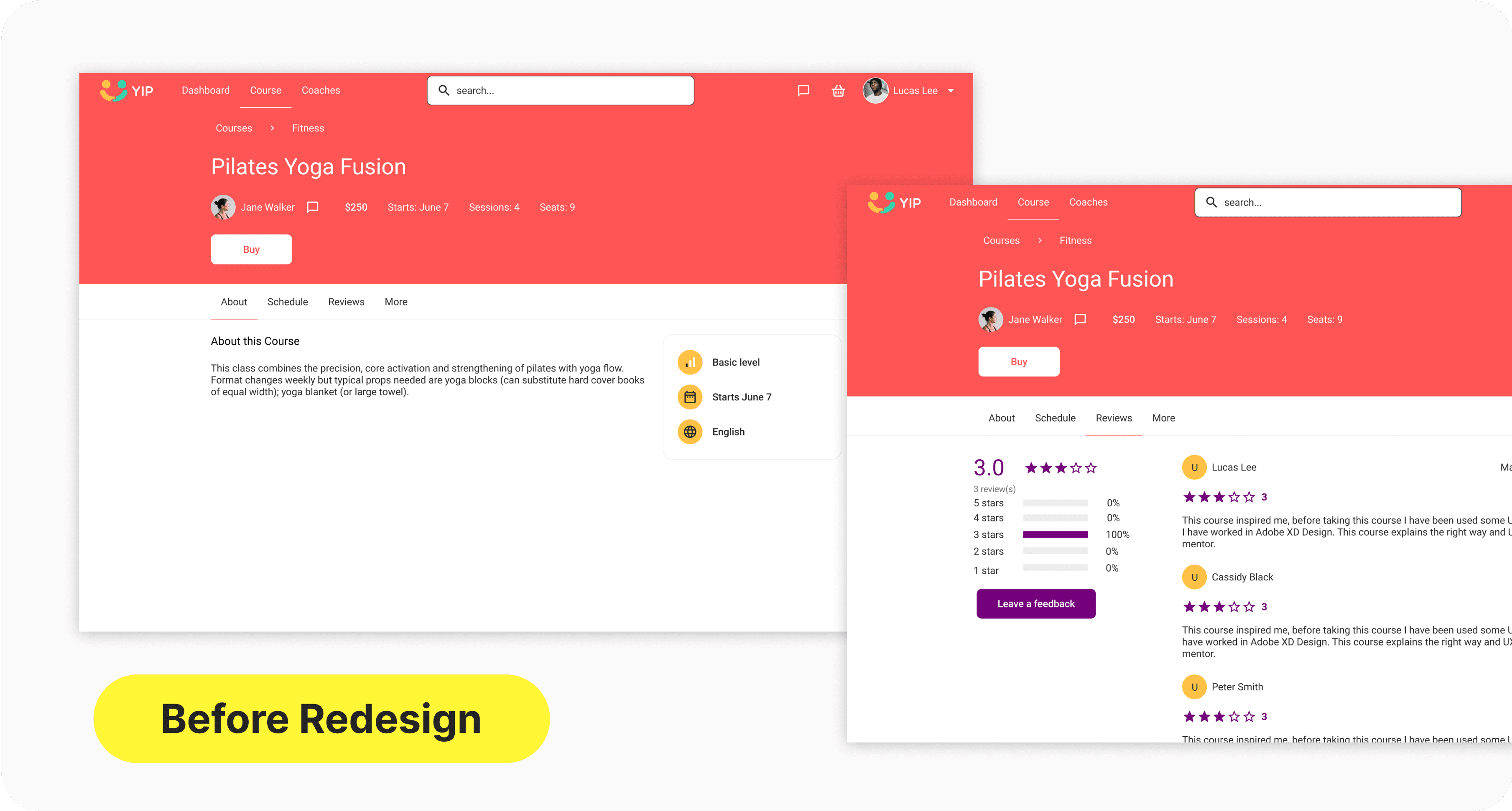
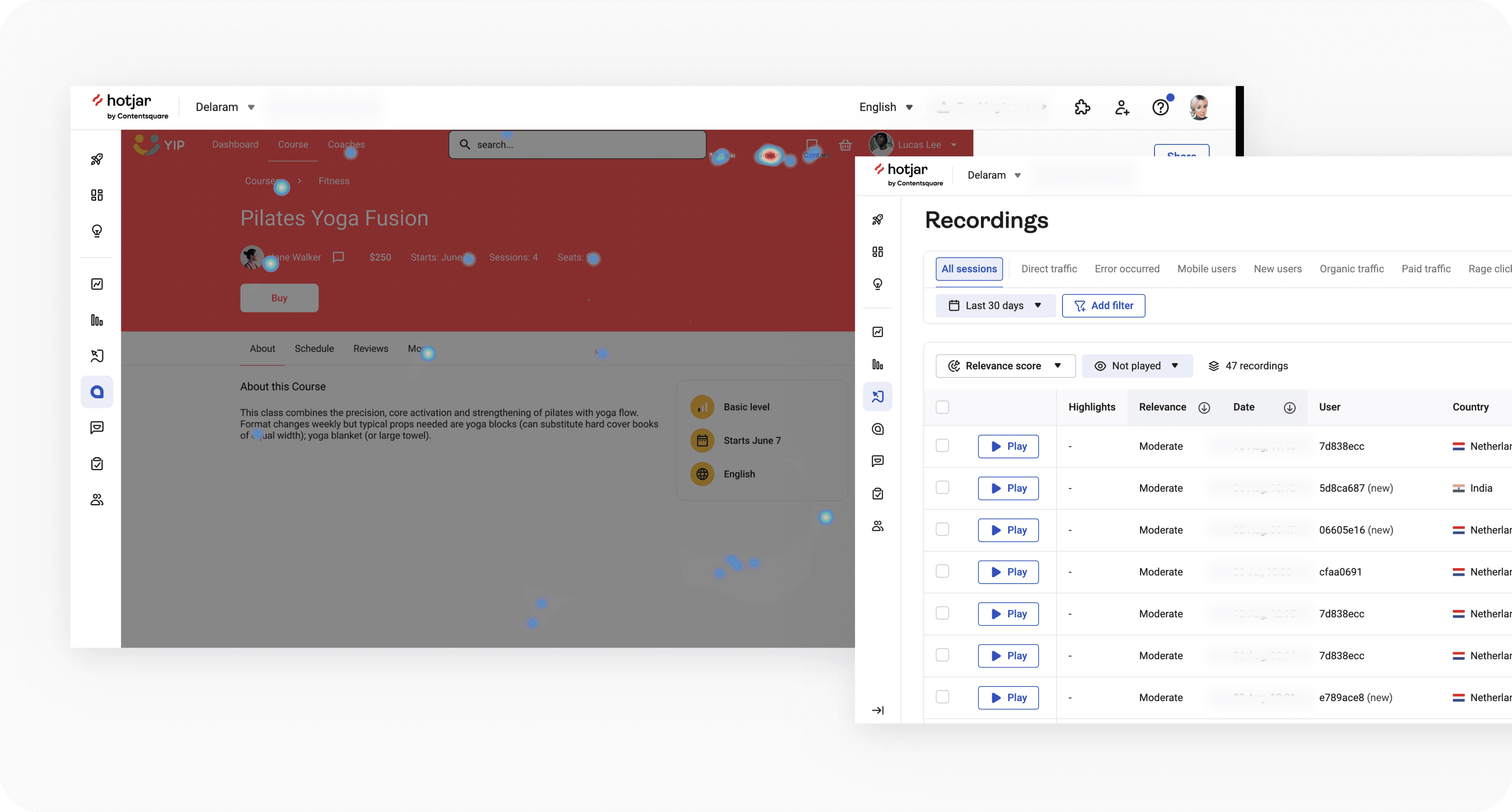
The YIP course page is the most crucial aspect of our product. Although 90% of users visited this page, data showed they spent little time on it, with low User Satisfaction and Conversion Rates.
First Step
We started with a team discussion to better understand business requirements, gather existing stakeholder knowledge, expectations and create consensus on plans and priorities for a product, its direction and key milestones.
Users Problem
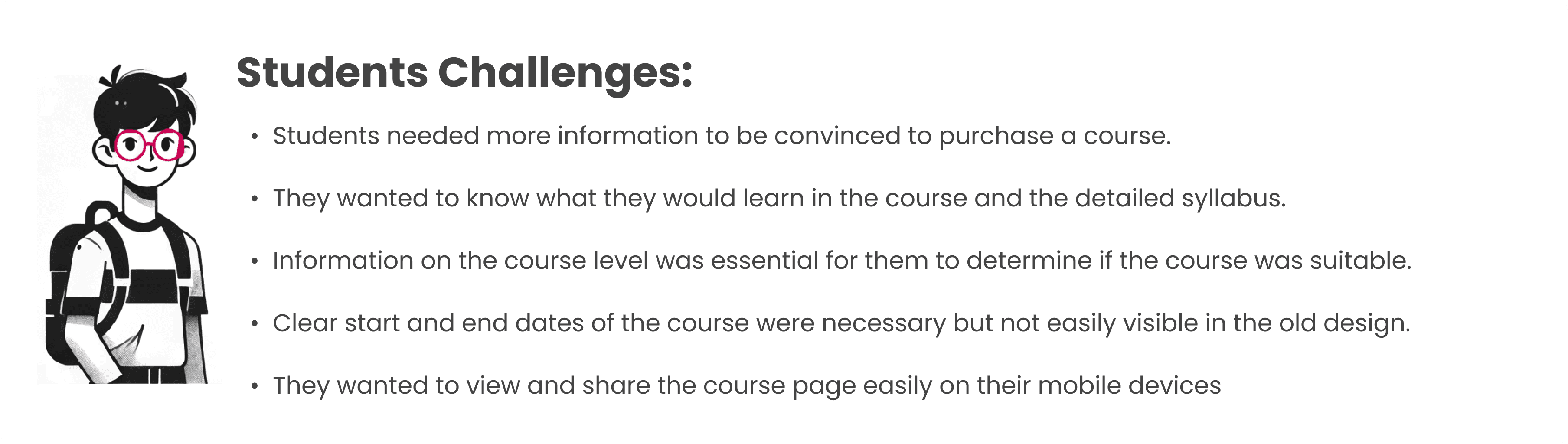
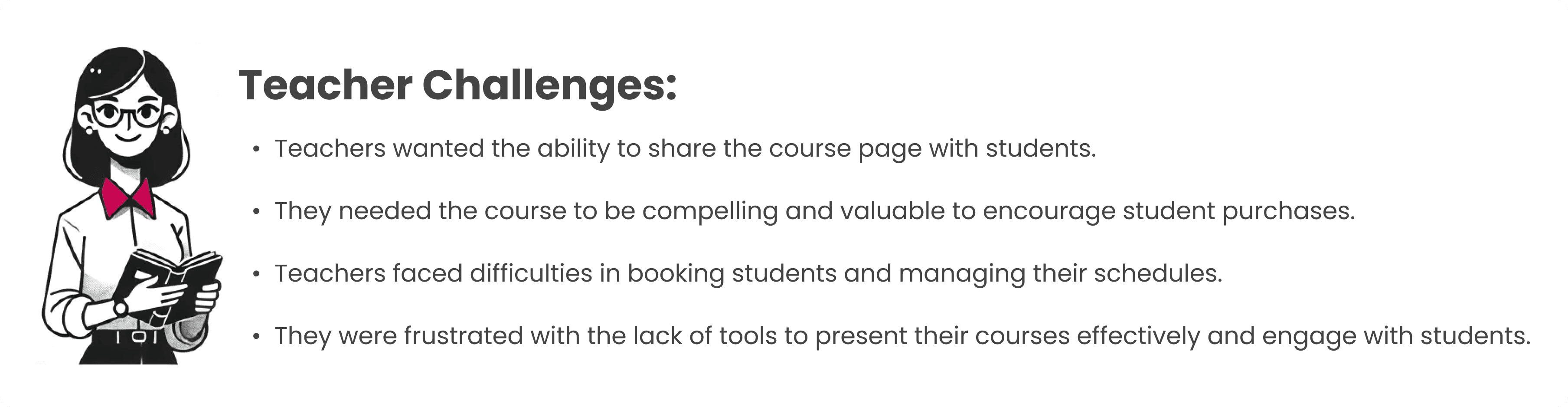
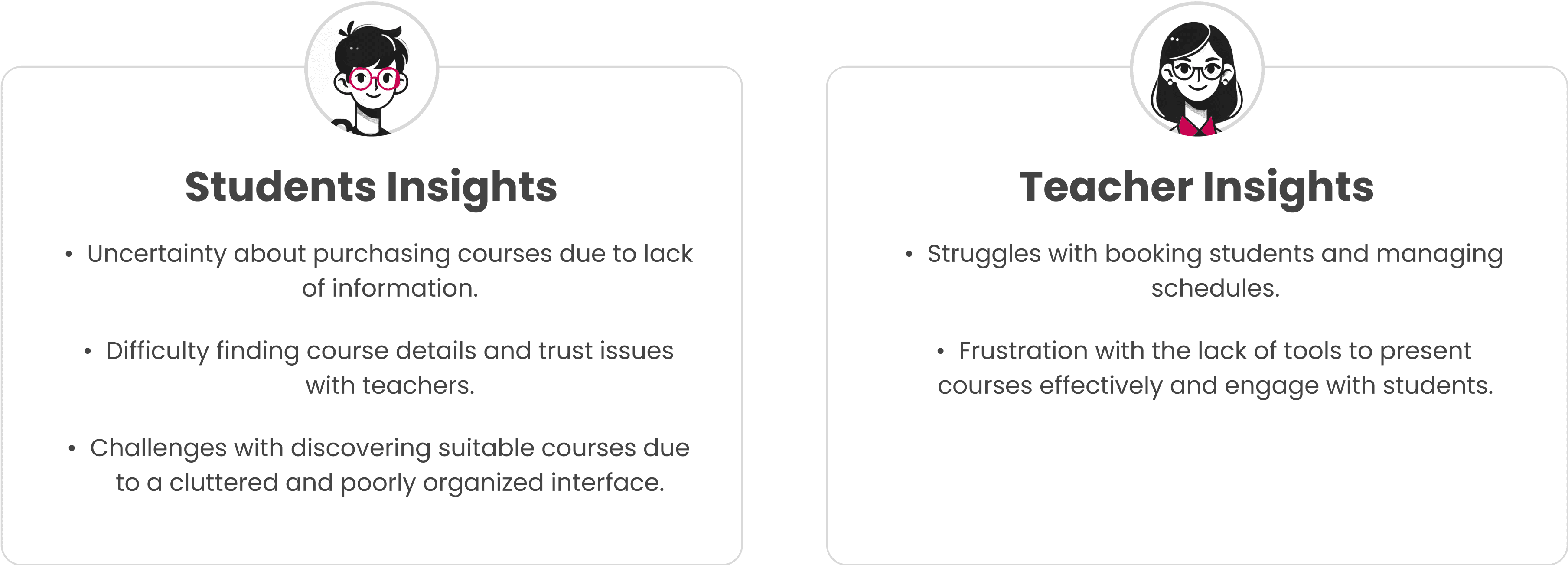
Through observation, interviews, surveys, and desk research, I identified several key pain points for both students and teachers:
Discovery
Research
To address these challenges, I employed various discovery methods, including interviews, competitor research, and creating user personas. Here are the key findings:
Interviews
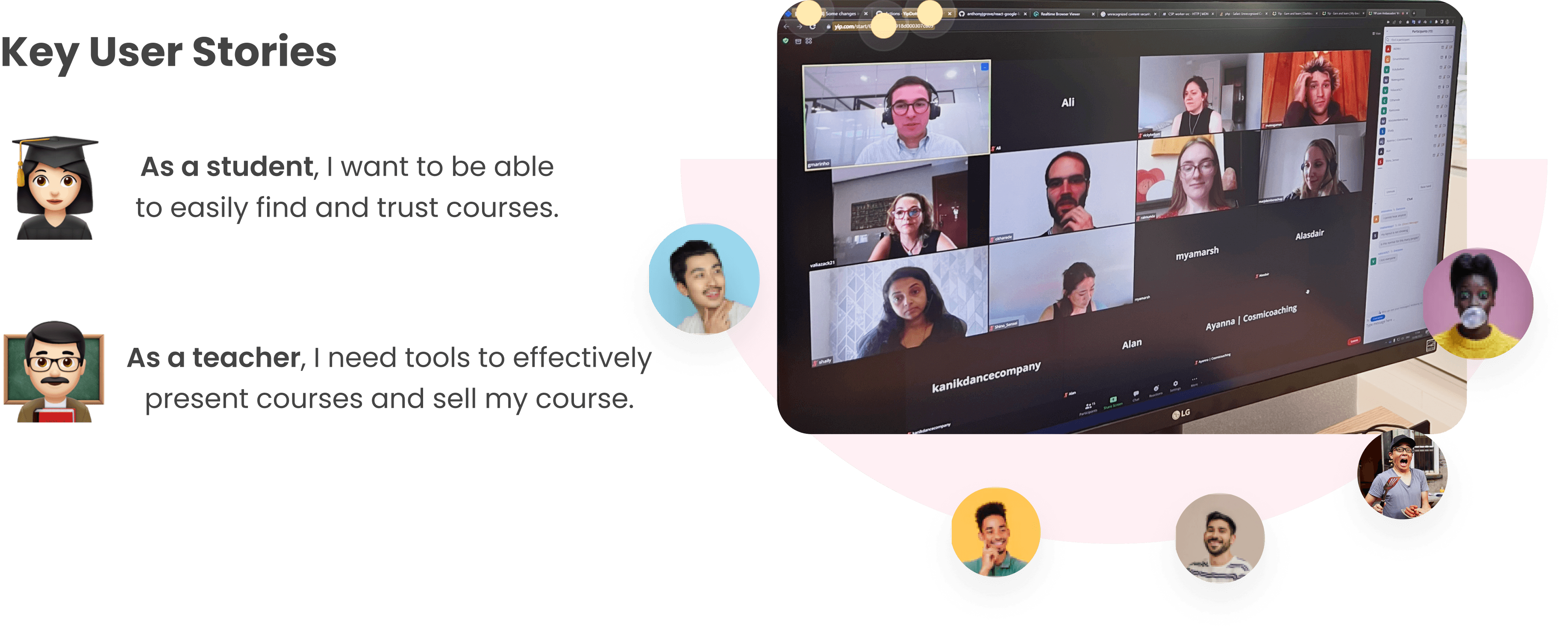
Interviews revealed teachers' motivations and challenges in booking students, providing comprehensive insights into both personas' needs and obstacles.
Competitor Analysis
After thoroughly analysing our competitors, I identified several key features that contribute to their success. We also assessed the user interface design of these platforms. These features include:
Key Features
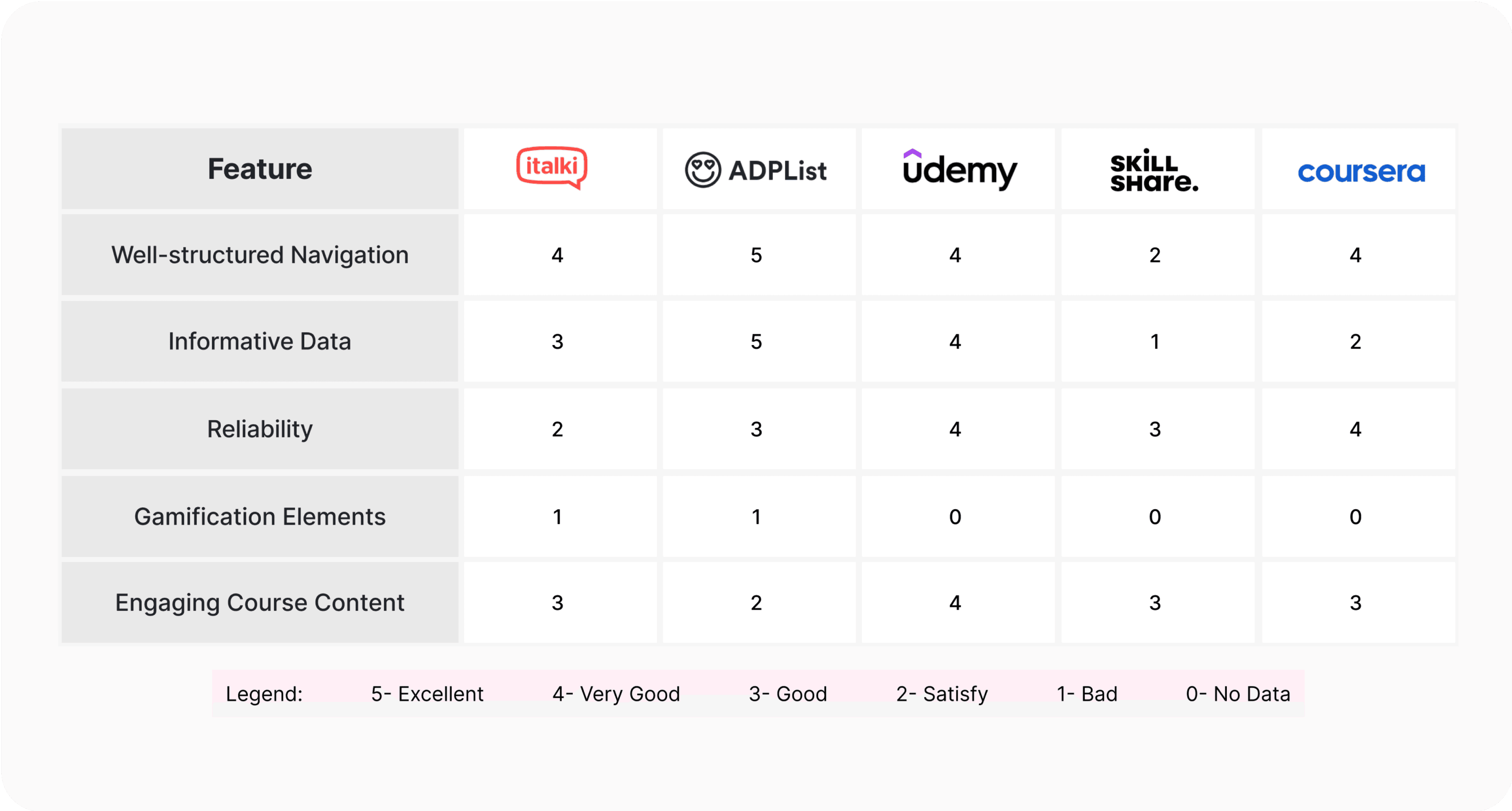
After thoroughly analysing our competitors, I identified several key features that contribute to their success. We also assessed the user interface design of these platforms.
These features include:
Well-structured Navigation: Clear and logical navigation paths that help users find information easily.
Informative Data: Comprehensive and useful information provided to users.
Gamification Elements: Use of game-like elements to enhance user engagement and motivation.
Trustworthiness: Consistent performance and trustworthiness of the platform.
Engaging Course Content: Attractive and well-designed course materials that enhance learning
Research Results
As a result of our various discovery methods Here are the key findings:
Solution
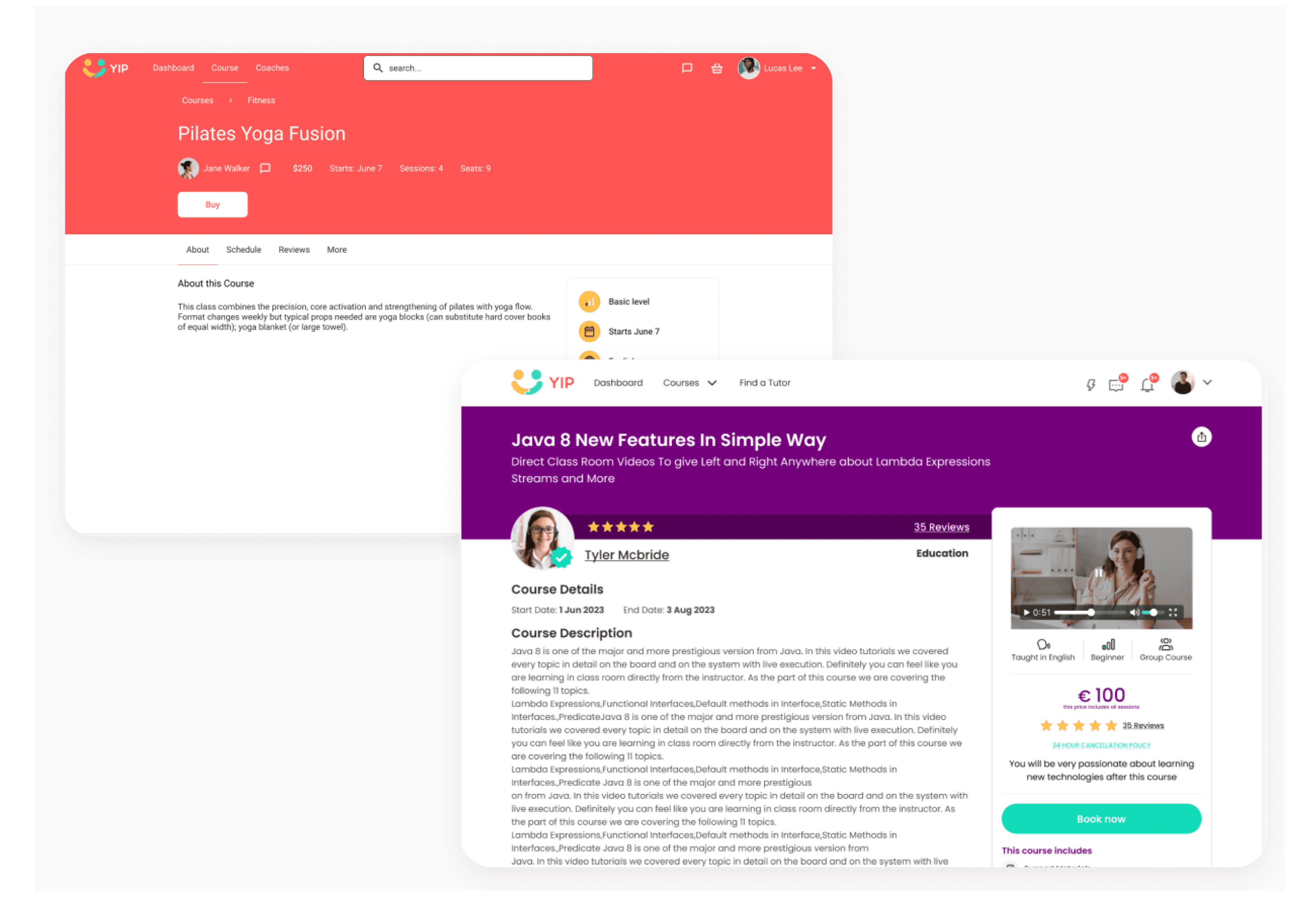
Redesigning the Course Page
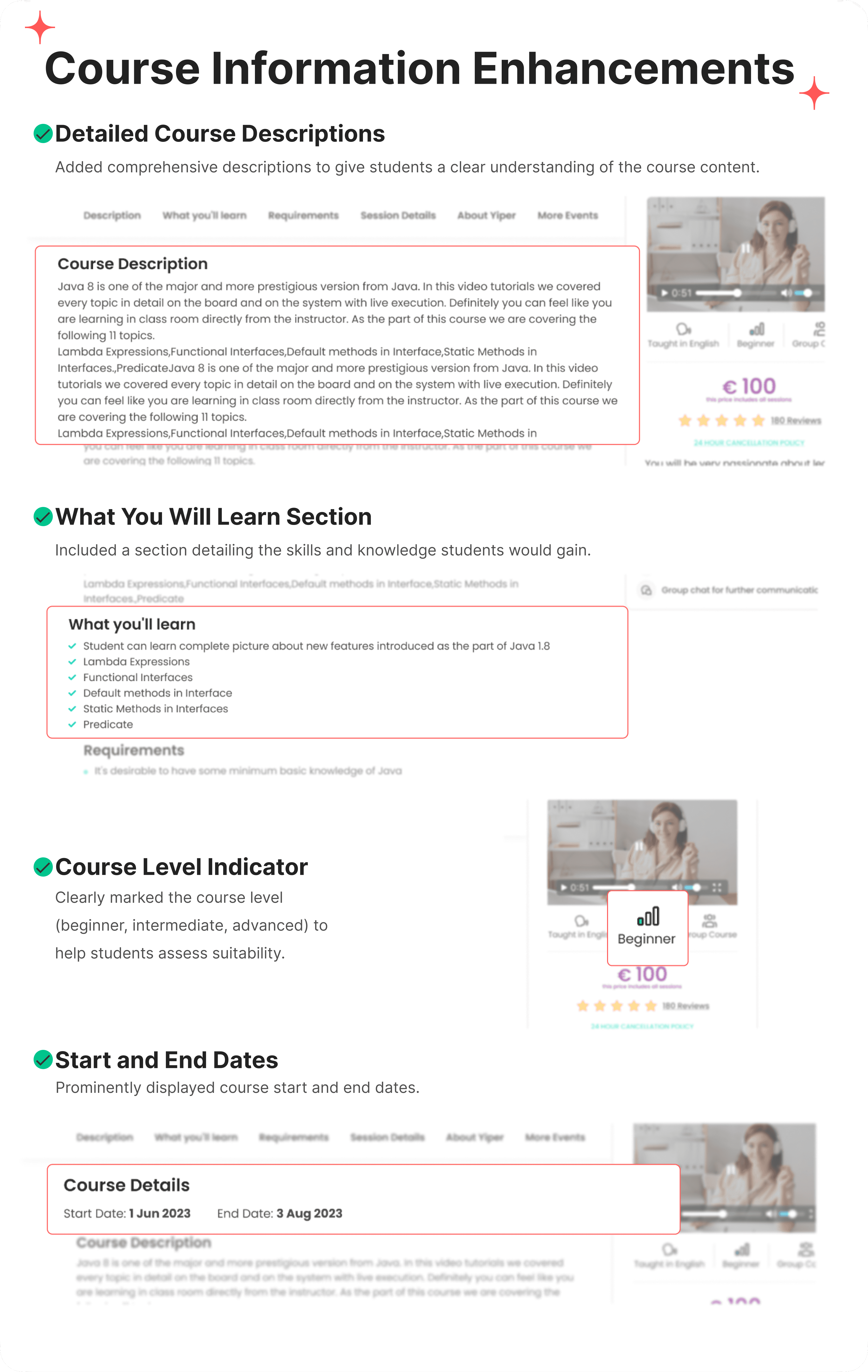
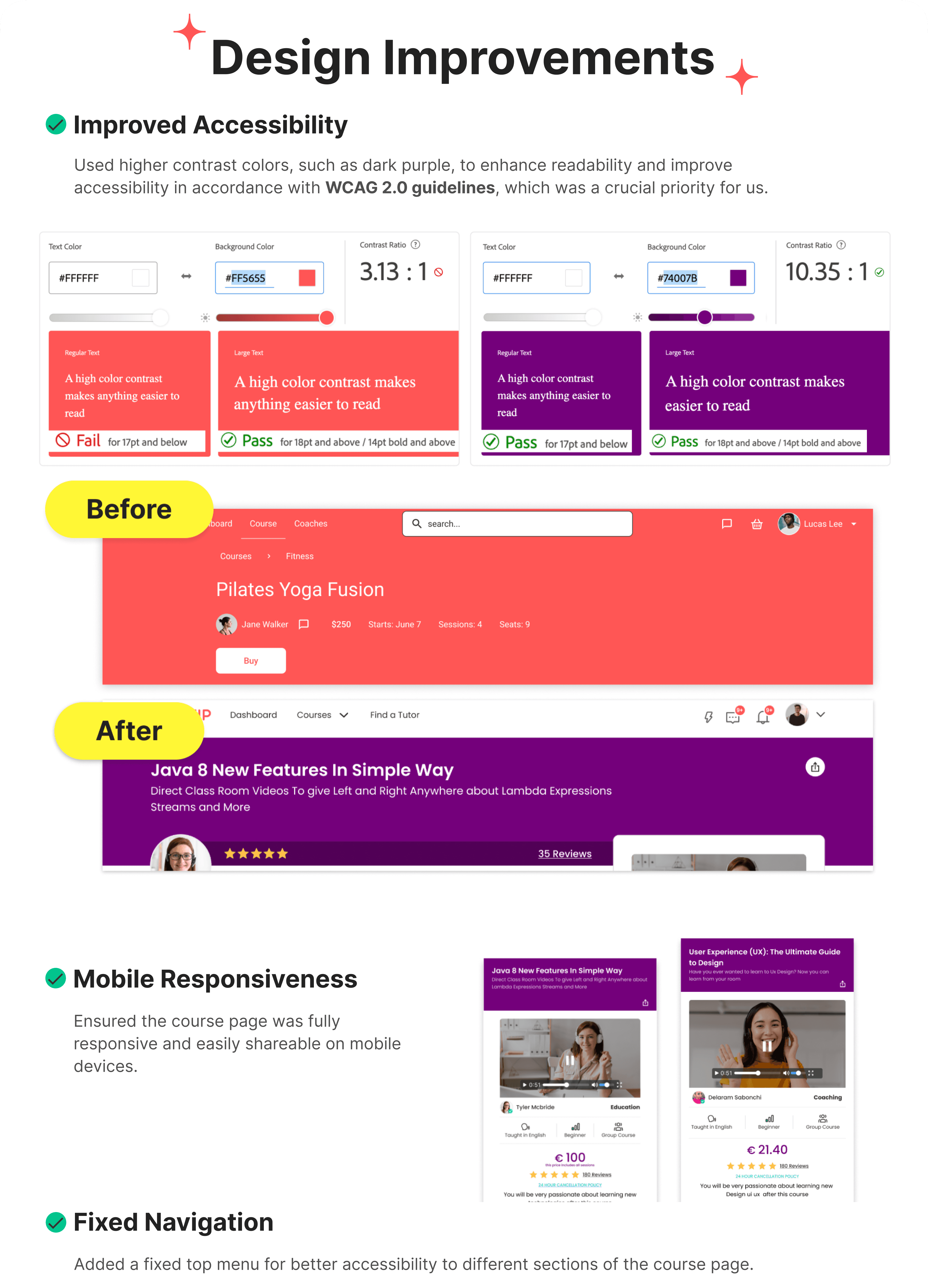
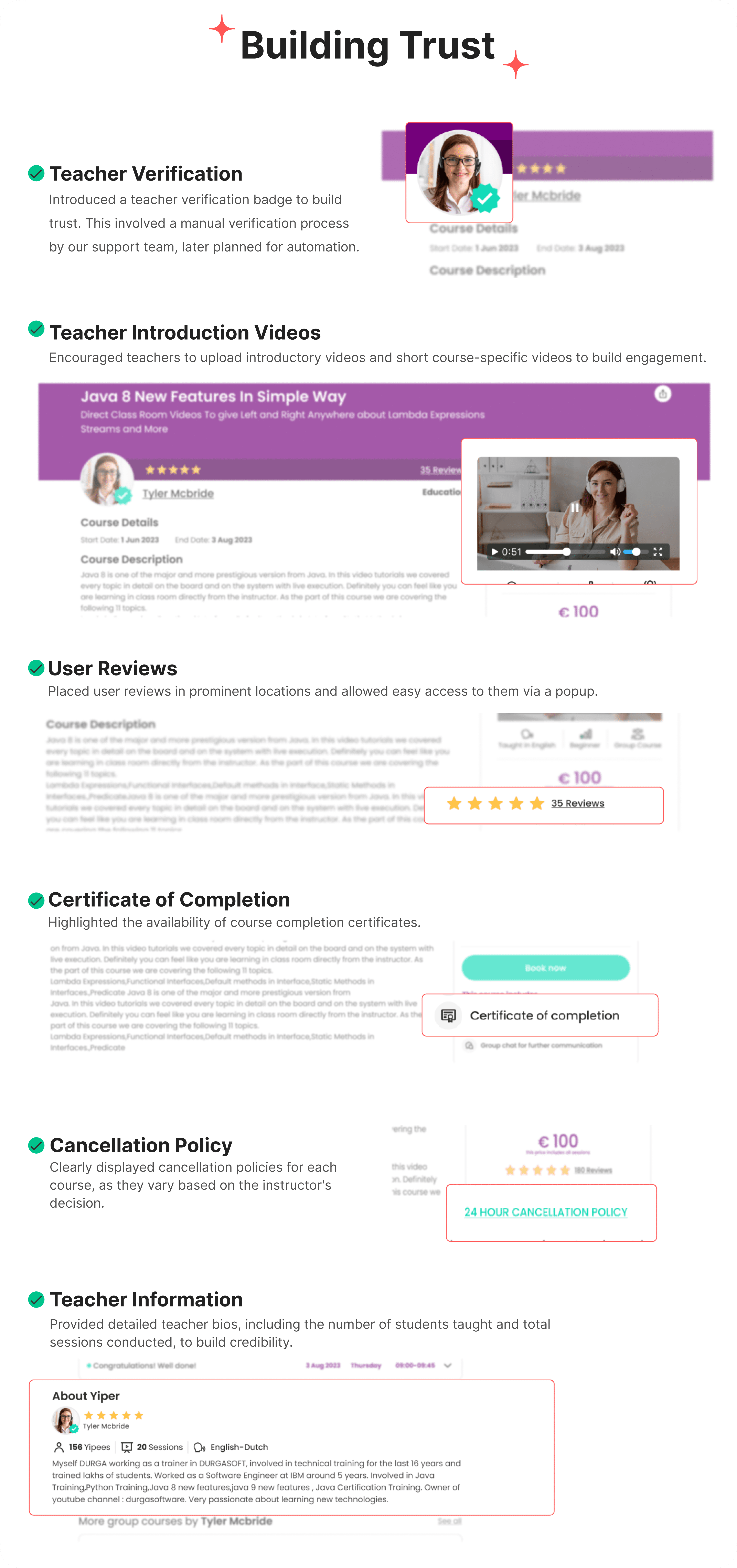
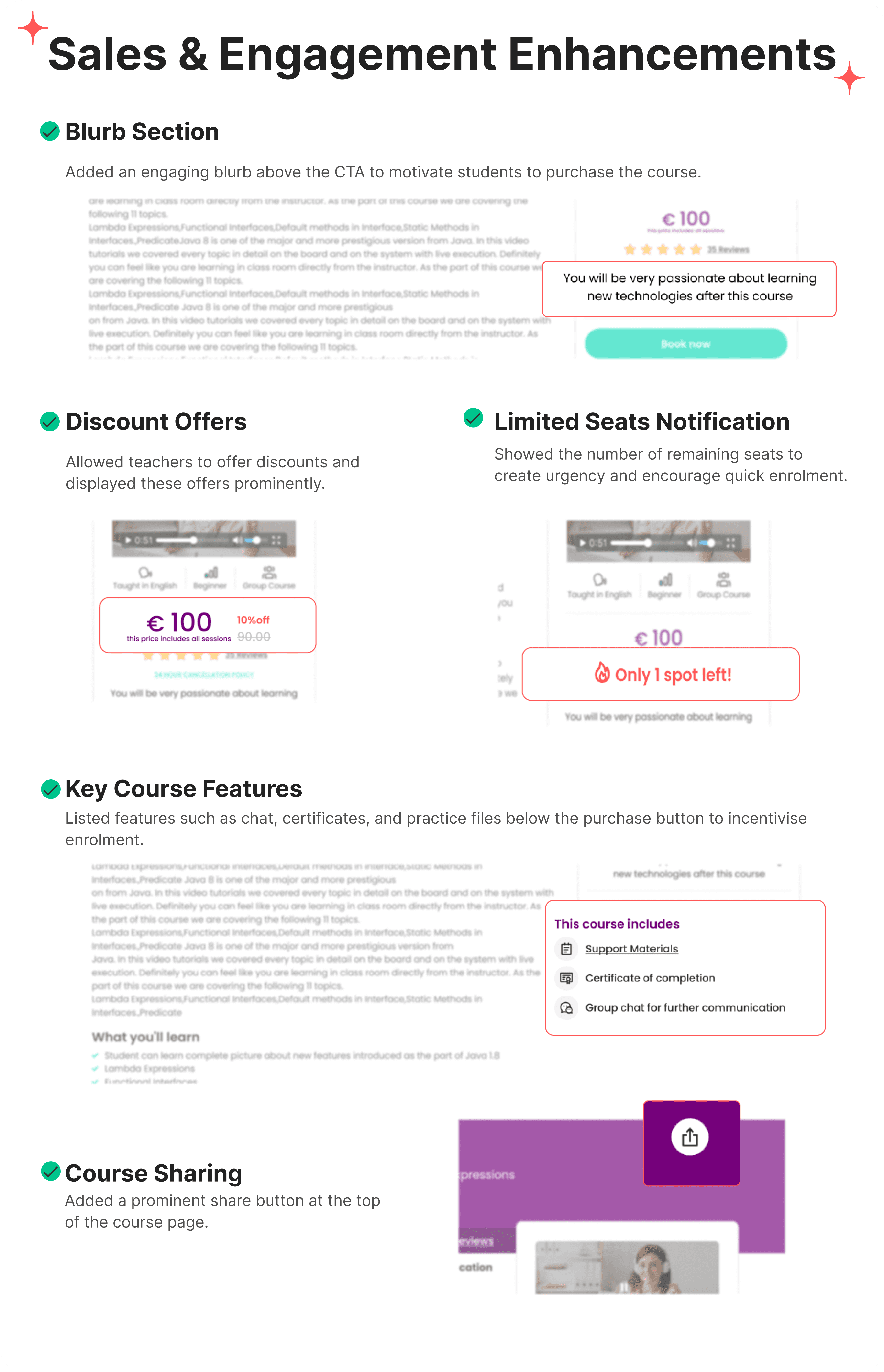
Based on research and best practices, we implemented several solutions to address the identified problems:


Testing
Usability Testing
To ensure the effectiveness of our redesign, we conducted several rounds of usability testing. These tests were crucial in identifying potential issues and gathering direct user feedback. Our testing process included the following steps:
Recruitment:
We recruited a diverse group of participants, including both students and teachers, to represent our primary user personas.Test Scenarios:
Created realistic scenarios for users to perform specific tasks on the redesigned course page, such as finding course information, purchasing a course, and sharing the course page.Moderated Sessions:
Conducted moderated sessions where participants were observed while interacting with the course page. We recorded their actions, comments, and any difficulties they encountered.Surveys and Interviews:
After each session, participants completed a survey to provide quantitative data on their experience. Follow-up interviews were conducted to gather qualitative insights and deeper understanding of their feedback.
Key Findings
The usability tests provided valuable insights that informed our iterative design process:
Improved Navigation: Users found the new fixed top menu and structured navigation intuitive, significantly reducing the time taken to find relevant information.
Enhanced Readability: The higher contrast colors improved readability, particularly for users with visual impairments, validating our focus on accessibility.
Positive Feedback on Course Information: Participants appreciated the detailed course descriptions, learning outcomes, and clear start and end dates. This transparency increased their confidence in making a purchase.Mobile Experience: Users praised the mobile responsiveness of the design, noting that it was easy to navigate and share courses from their devices.
Iterative Improvements
Based on the feedback from usability testing, we made several iterative improvements:
Refined User Interface: Adjusted the layout and design elements to further enhance clarity and ease of use.
Added Tooltips: Implemented tooltips for complex features to provide additional guidance without cluttering the interface.
Enhanced Review Section: Made the user review section more prominent and easier to access, as participants highlighted its importance in their decision-making process.
Streamlined Purchase Process: Simplified the checkout process based on user feedback to minimize steps and reduce friction.
A/B Testing
In addition to usability testing, we conducted A/B tests to compare the performance of the old and new designs. Key metrics such as conversion rates, time on page, and user engagement were tracked and analyzed. The results consistently showed that the redesigned course page outperformed the previous version, confirming the effectiveness of our design decisions.
Continuous Feedback
The testing phase was not a one-time effort but an ongoing process. We established channels for continuous feedback, including in-app surveys and feedback forms, ensuring we could promptly address any new issues and keep improving the user experience.
Through rigorous testing and iterative improvements, we successfully created a course page that meets the needs of both students and teachers, enhances usability, and drives business growth.
Impact and outcomes
Achieving Impact Through Key Metrics in Our Project
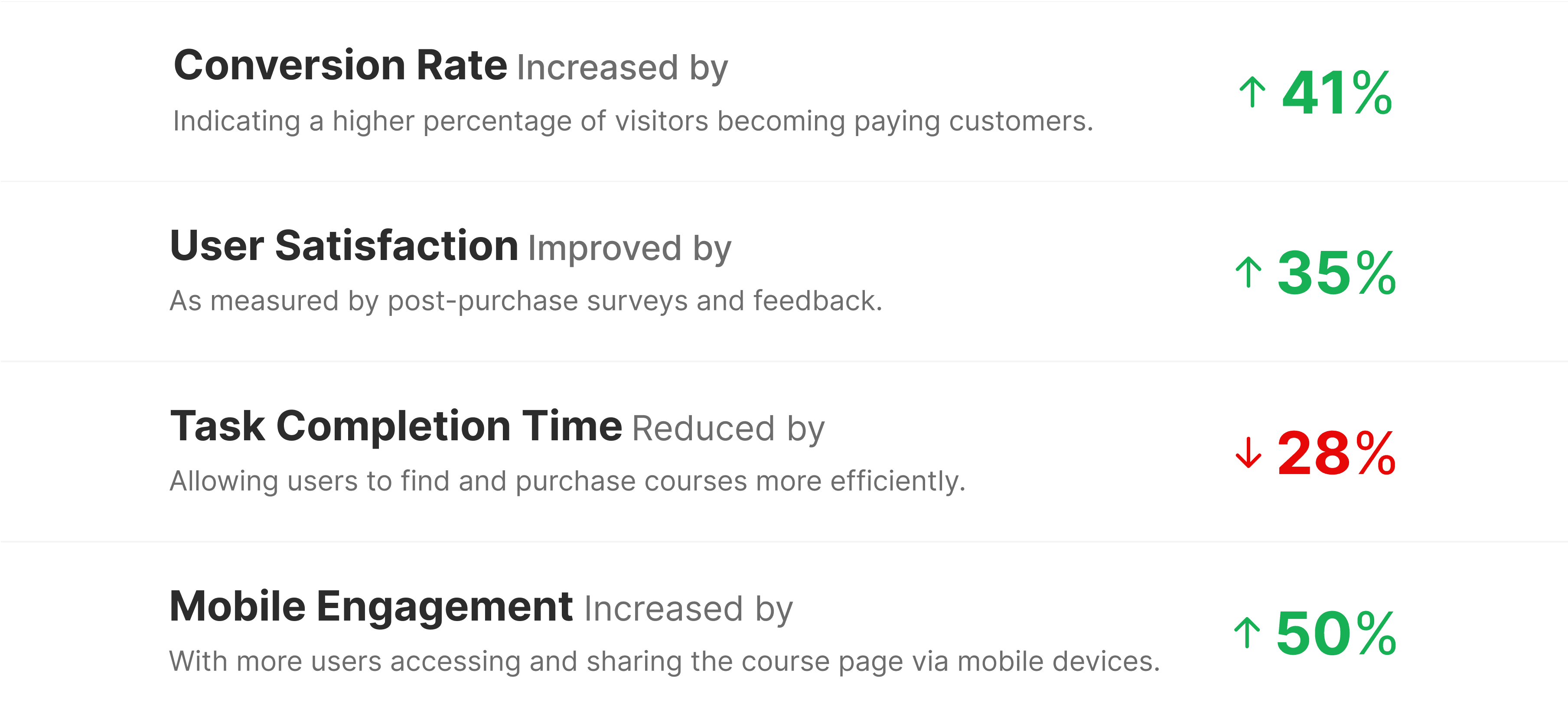
The redesigned course page resulted in significant improvements across various metrics, showcasing the effectiveness of the implemented solutions:
Final Deliverable
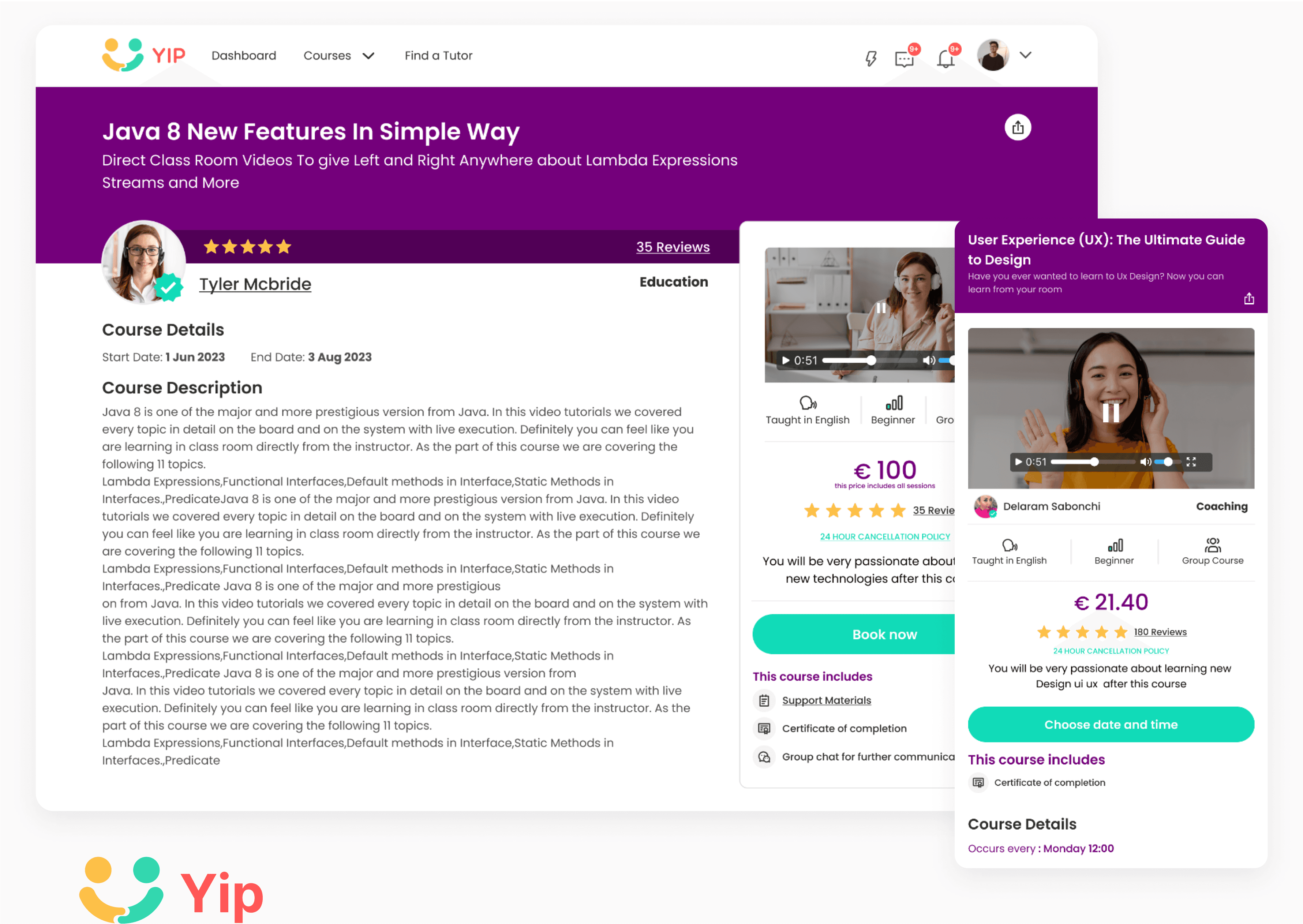
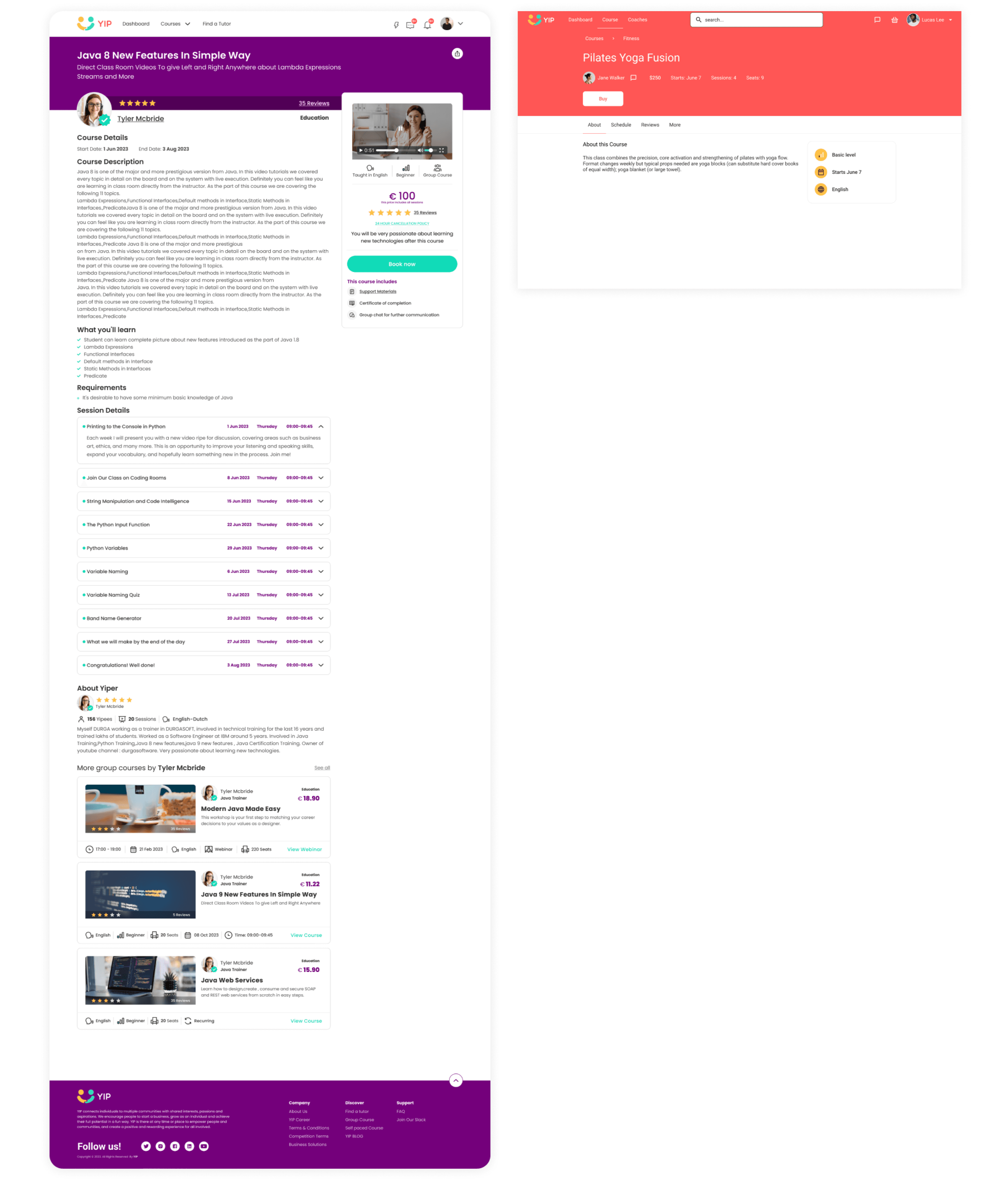
With a new approach to the course page, users were able to quickly access important data and purchase courses more easily. This redesign improved the overall user experience and satisfaction.
Background & context
Enhancing Course Access and Revenue
How might we help students find valuable online courses and purchase them easily while also enabling teachers to effectively present their courses and earn revenue?
My role
Owning the end-to-end design process
As the product designer, I was responsible for defining and refining the user experience and interface.
My role encompassed a comprehensive understanding of the distinct needs of expectant mothers and caregivers, conducting exhaustive user research, and translating these insights into sophisticated design solutions. From meticulously crafting user personas to developing wireframes and high-fidelity interfaces, my collaboration with the development team ensured the precise implementation of the envisioned user experience. Furthermore, I spearheaded the assessment of project success, utilizing metrics and user feedback to inform iterative adjustments, thereby perpetually enhancing the overall user experience of the application.
Design Toolkit
Problem statement
Problems:
The YIP course page is the most crucial aspect of our product. Although 90% of users visited this page, data showed they spent little time on it, with low User Satisfaction and Conversion Rates.
First Step
We started with a team discussion to better understand business requirements, gather existing stakeholder knowledge, expectations and create consensus on plans and priorities for a product, its direction and key milestones.
Users Problem
Through observation, interviews, surveys, and desk research, I identified several key pain points for both students and teachers:
Discovery
Research
To address these challenges, I employed various discovery methods, including interviews, competitor research, and creating user personas. Here are the key findings:
Interviews
Interviews revealed teachers' motivations and challenges in booking students, providing comprehensive insights into both personas' needs and obstacles.
Competitor Analysis
After thoroughly analysing our competitors, I identified several key features that contribute to their success. We also assessed the user interface design of these platforms. These features include:
Key Features
After thoroughly analysing our competitors, I identified several key features that contribute to their success. We also assessed the user interface design of these platforms.
These features include:
Well-structured Navigation: Clear and logical navigation paths that help users find information easily.
Informative Data: Comprehensive and useful information provided to users.
Gamification Elements: Use of game-like elements to enhance user engagement and motivation.
Trustworthiness: Consistent performance and trustworthiness of the platform.
Engaging Course Content: Attractive and well-designed course materials that enhance learning
Research Results
As a result of our various discovery methods Here are the key findings:
Solution
Redesigning the Course Page
Based on research and best practices, we implemented several solutions to address the identified problems:
Testing
Usability Testing
To ensure the effectiveness of our redesign, we conducted several rounds of usability testing. These tests were crucial in identifying potential issues and gathering direct user feedback. Our testing process included the following steps:
Recruitment:
We recruited a diverse group of participants, including both students and teachers, to represent our primary user personas.Test Scenarios:
Created realistic scenarios for users to perform specific tasks on the redesigned course page, such as finding course information, purchasing a course, and sharing the course page.Moderated Sessions:
Conducted moderated sessions where participants were observed while interacting with the course page. We recorded their actions, comments, and any difficulties they encountered.Surveys and Interviews:
After each session, participants completed a survey to provide quantitative data on their experience. Follow-up interviews were conducted to gather qualitative insights and deeper understanding of their feedback.
Key Findings
The usability tests provided valuable insights that informed our iterative design process:
Improved Navigation: Users found the new fixed top menu and structured navigation intuitive, significantly reducing the time taken to find relevant information.
Enhanced Readability: The higher contrast colors improved readability, particularly for users with visual impairments, validating our focus on accessibility.
Positive Feedback on Course Information: Participants appreciated the detailed course descriptions, learning outcomes, and clear start and end dates. This transparency increased their confidence in making a purchase.Mobile Experience: Users praised the mobile responsiveness of the design, noting that it was easy to navigate and share courses from their devices.
Iterative Improvements
Based on the feedback from usability testing, we made several iterative improvements:
Refined User Interface: Adjusted the layout and design elements to further enhance clarity and ease of use.
Added Tooltips: Implemented tooltips for complex features to provide additional guidance without cluttering the interface.
Enhanced Review Section: Made the user review section more prominent and easier to access, as participants highlighted its importance in their decision-making process.
Streamlined Purchase Process: Simplified the checkout process based on user feedback to minimize steps and reduce friction.
A/B Testing
In addition to usability testing, we conducted A/B tests to compare the performance of the old and new designs. Key metrics such as conversion rates, time on page, and user engagement were tracked and analyzed. The results consistently showed that the redesigned course page outperformed the previous version, confirming the effectiveness of our design decisions.
Continuous Feedback
The testing phase was not a one-time effort but an ongoing process. We established channels for continuous feedback, including in-app surveys and feedback forms, ensuring we could promptly address any new issues and keep improving the user experience.
Through rigorous testing and iterative improvements, we successfully created a course page that meets the needs of both students and teachers, enhances usability, and drives business growth.
Impact and outcomes
Achieving Impact Through Key Metrics in Our Project
The redesigned course page resulted in significant improvements across various metrics, showcasing the effectiveness of the implemented solutions:
Final Deliverable
With a new approach to the course page, users were able to quickly access important data and purchase courses more easily. This redesign improved the overall user experience and satisfaction.