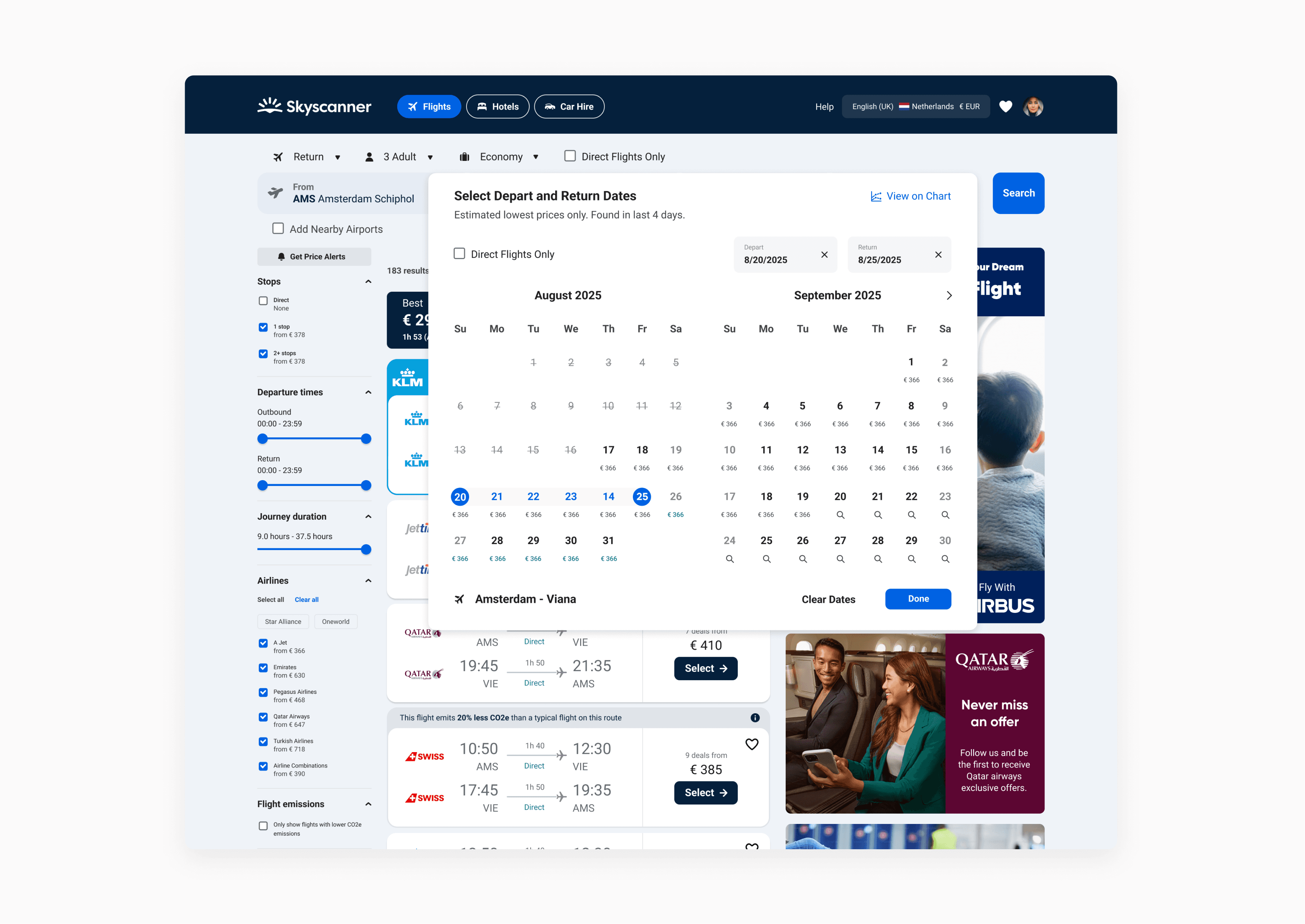
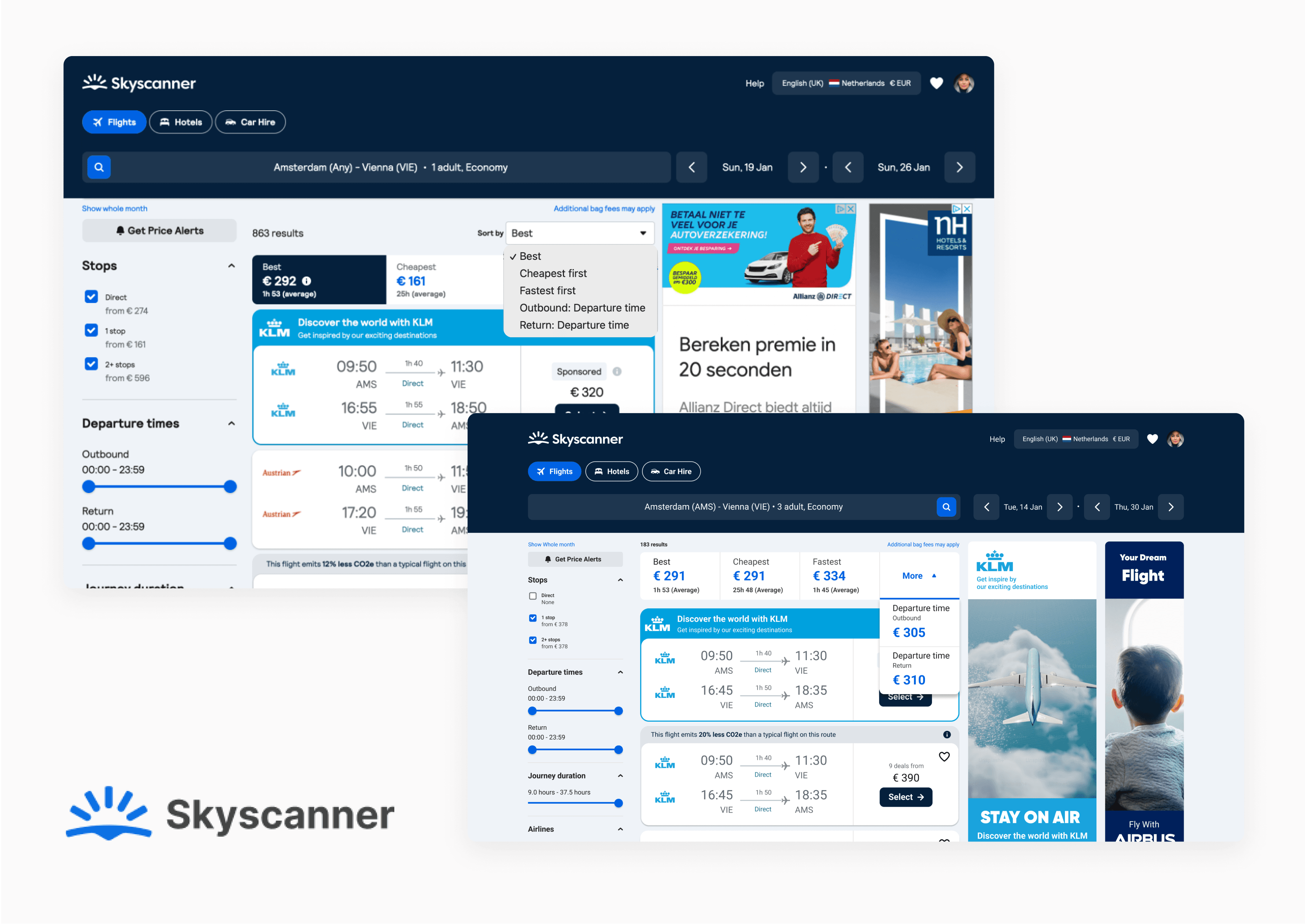

Background & context
Platform for comparing flights, hotels, and car rentals.
Skyscanner is a leading Online Travel Agency (OTA) and metasearch platform in the travel and tourism industry. It helps users compare prices for flights, hotels, and car rentals, enabling them to find the best options based on their preferences.
With a business model focused on affiliate commissions and advertising, Skyscanner connects travelers to partner websites for seamless bookings.
Its user-centric design and powerful search capabilities make it a trusted tool for millions of travelers worldwide.
Problem Definition
Understanding the key challenges users face
To identify and clearly define the users' problem, I focused on analyzing the problem space thoroughly.
In an ideal scenario with three weeks, my first step would be to organize a meeting with the Product Owner to gather detailed insights into the problem and validate assumptions. This is crucial because misidentifying the problem can lead to wasted resources and ineffective solutions.
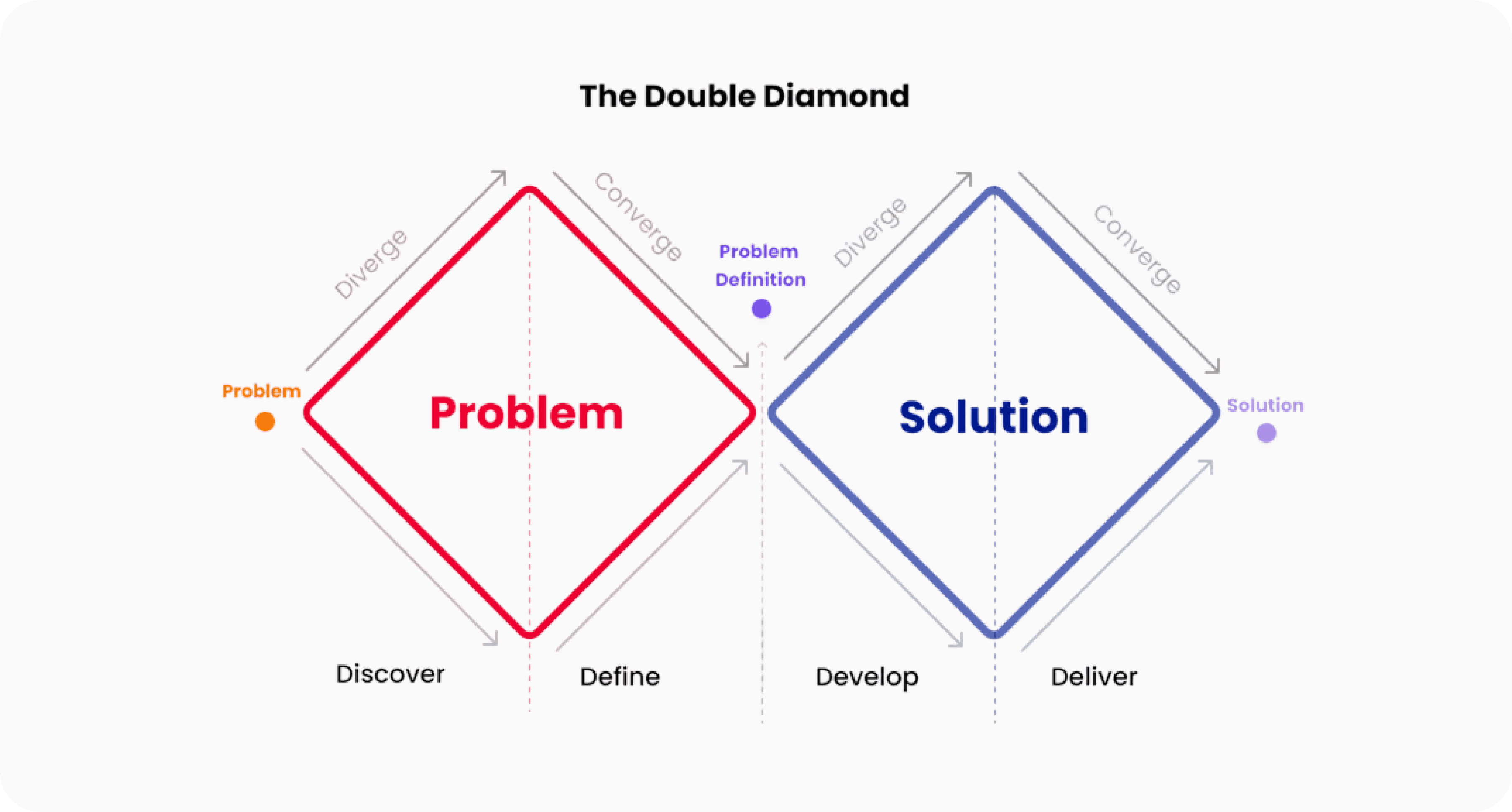
To ensure clarity, I utilized the Double Diamond framework to separate the Problem Space from the Solution Space:
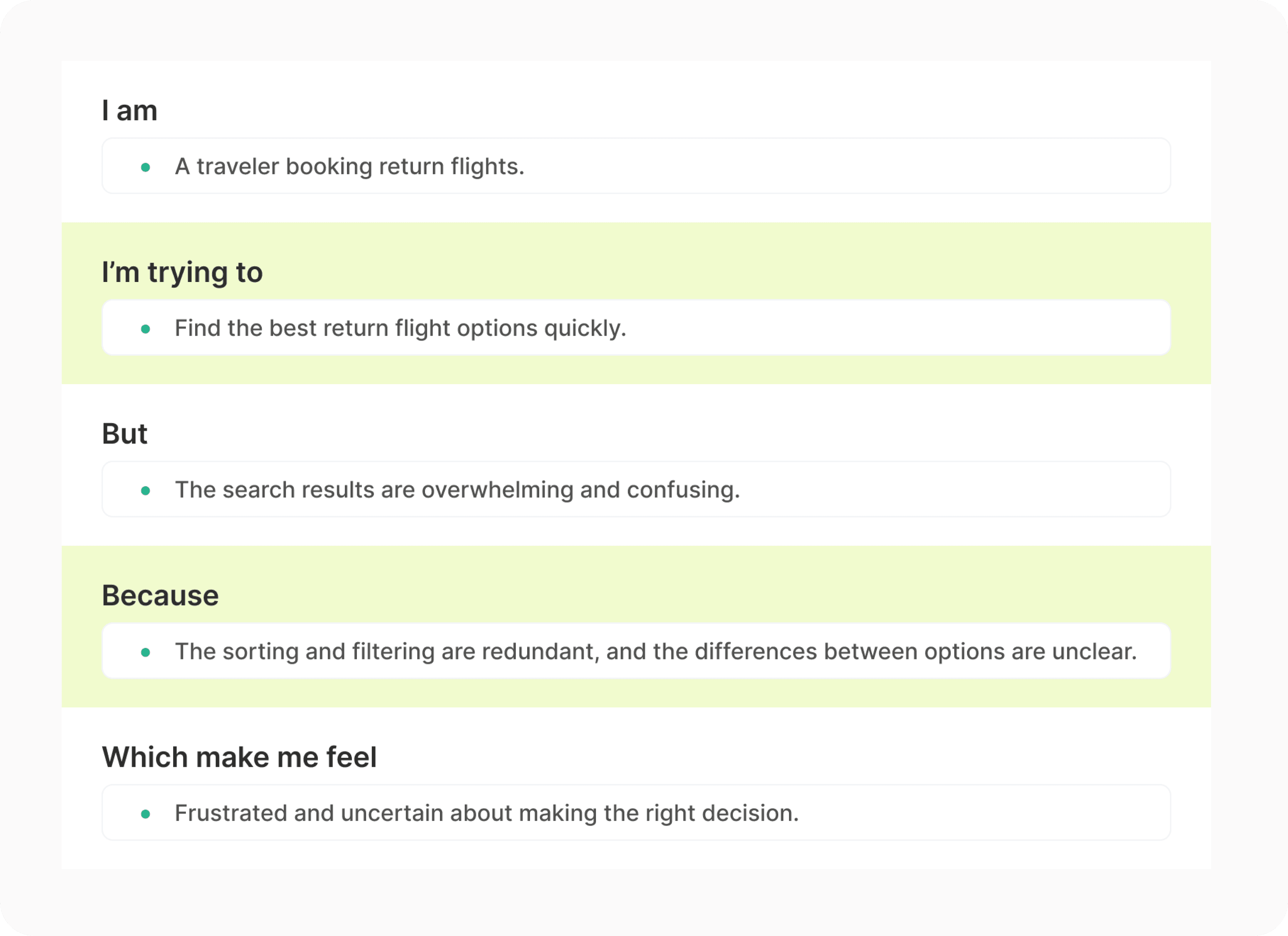
Problem statement
Defining the core issue impacting user experience
Approach in Time-Constrained Scenarios
With only three days for this project,
I adapted my approach to focus on the most critical steps:
Analyzed Skyscanner’s website and evaluated the current user experience.
Identified key user challenges:
Issue with departure flight times: Users struggled to differentiate between identical departure times and varying return times.
Issue with sorting: Users had difficulty finding flights based on specific times due to sorting by price.Had I more time, I would include:
Workshops with stakeholders to align on user problems.
User Interviews to validate findings.
Quantitative Data Analysis to identify patterns in user behavior.
Desk Research
Exploring solutions and industry practices.
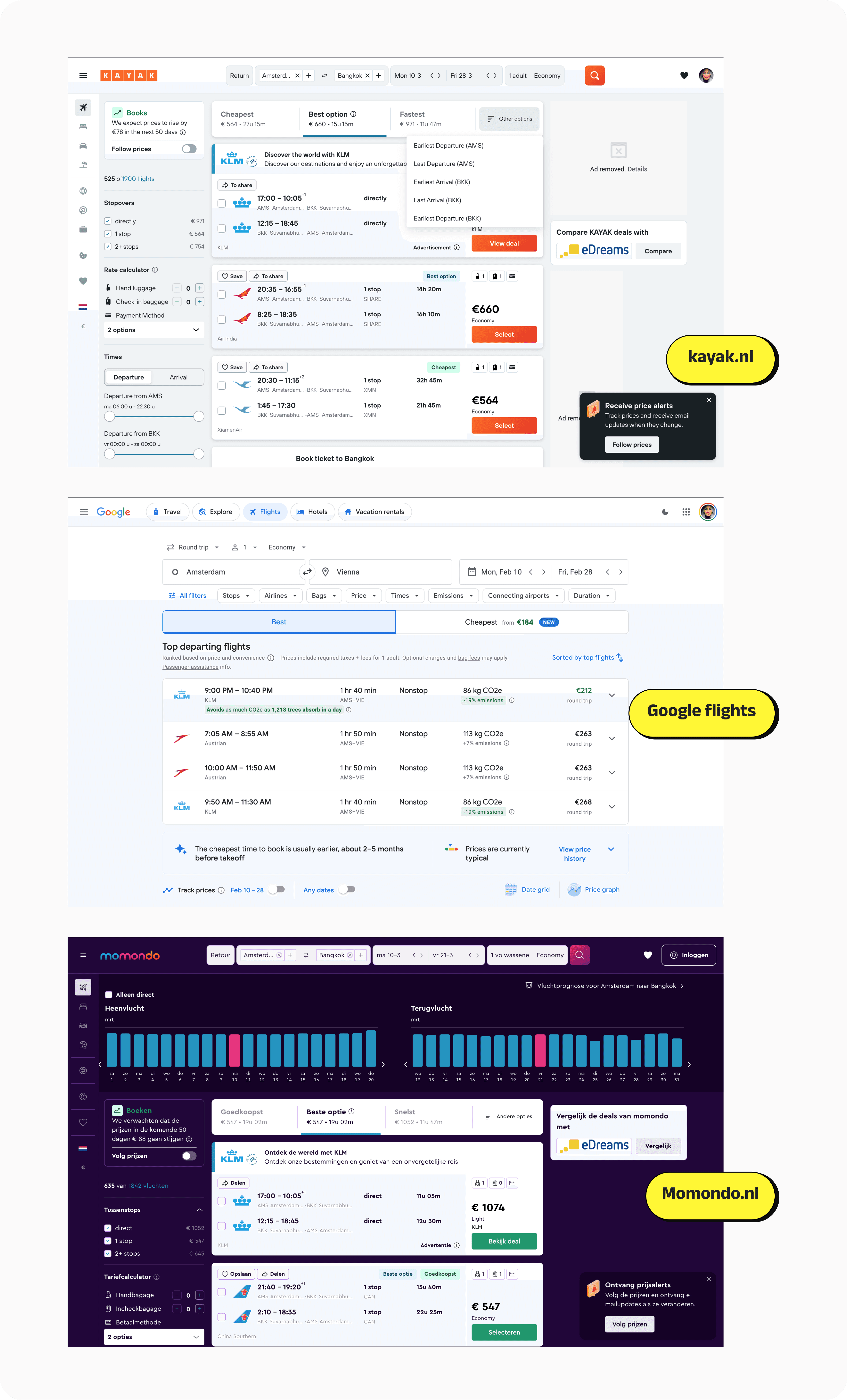
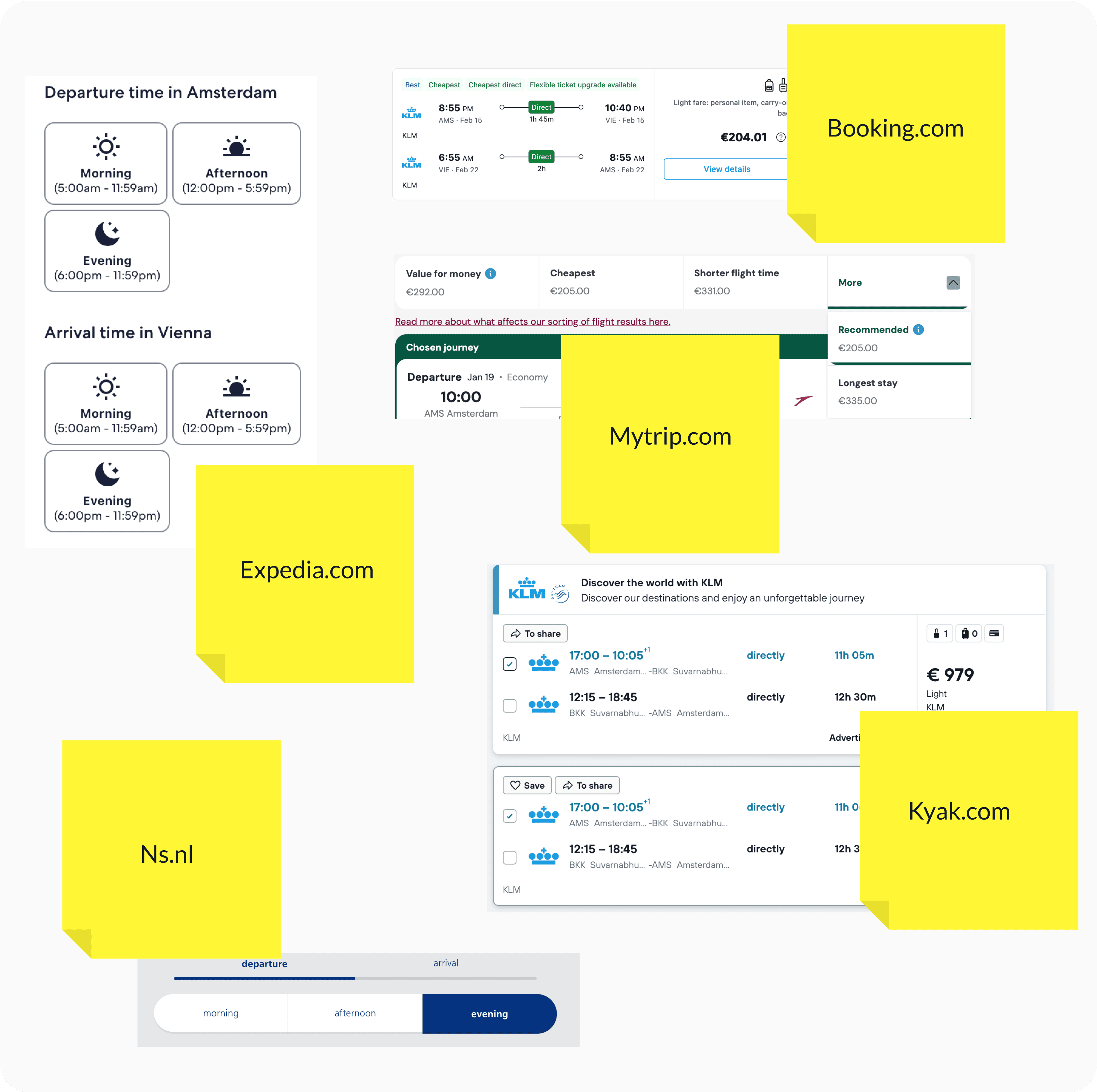
To gain insights, I conducted research focusing on competitor solutions and industry trends. I divided my research into three categories to gather insights, analyze competitors, and generate ideas:

Direct Competitors (Same Business Model)
These platforms redirect users to airline or ticketing websites for final bookings,
similar to Skyscanner’s metasearch model:
Kayak
Google Flights
Momondo
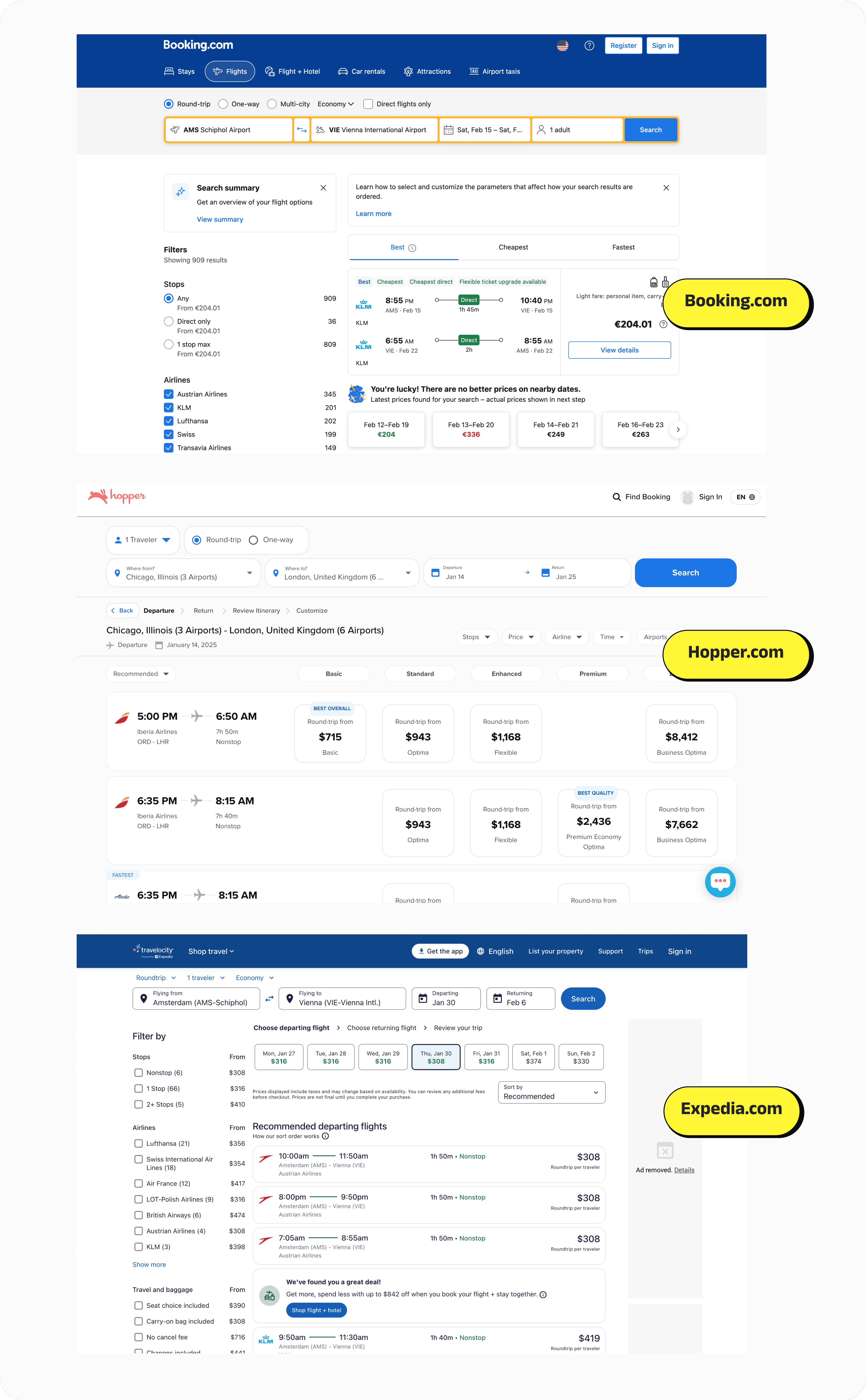
Direct Competitors (Different Business Models in the Same Industry)
These companies are in the travel industry but may have different business models, such as focusing on travel packages, specialized bookings, or providing unique user experiences:
Booking.com
Hopper.com
Expedia.com
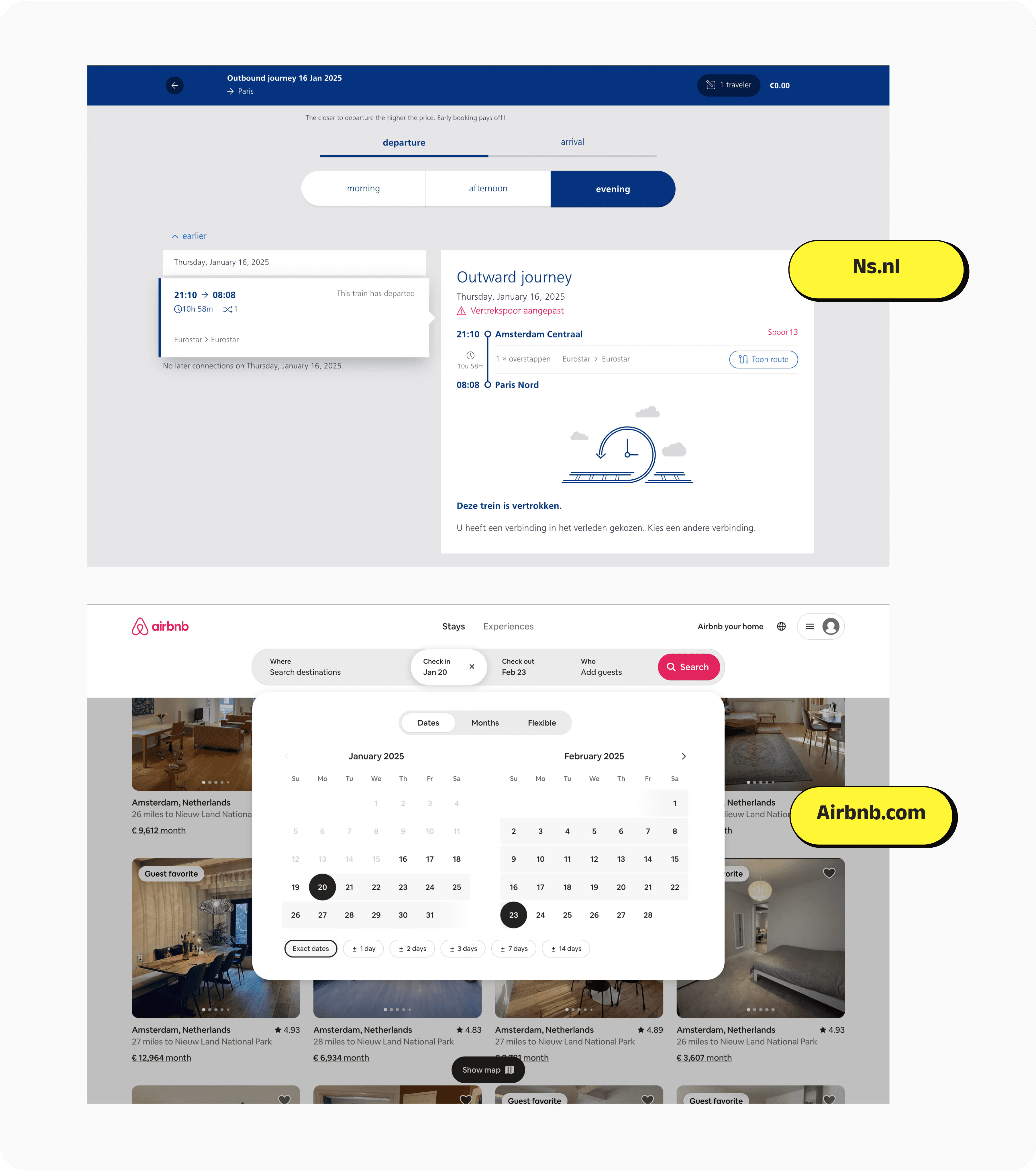
Cross-Industry Inspiration (Within Travel, But Not Flights)
To broaden the perspective and gather inspiration, I explored platforms in the travel industry
that are not focused on flights but face similar challenges in usability and user experience:
NS (Nederlandse Spoorwegen)
Airbnb
Key findings:
Insights from research and analysis.
Platforms offering bundled packages cater to flexible users but can overwhelm those seeking customization.
Simplifying options through visual clarity and better grouping can reduce decision fatigue.
Metrics
Measuring success through user-centric metrics.
To measure success, I defined the following metrics:
Defining clear and measurable metrics is essential to evaluate the effectiveness of the proposed solutions. Metrics help align design improvements with both user needs and business goals, ensuring that changes lead to tangible results.
By focusing on conversion rates, user satisfaction, and engagement, we can determine the success of the redesign and identify areas for further iteration.
Primary Metric:
Viewer-to-Lead Conversion Rate
The Percentage of Viewers Who Convert to LeadsConversion Rate for Return Flight Bookings
The percentage of users completing bookings.
Side Metrics:
Average Time on Page
Indicates whether users find information quickly.User Satisfaction Score
Measures ease of use through post-interaction surveys.Drop-off Rate
Tracks where users abandon the booking process.
Persona
Understanding the target user and their needs.
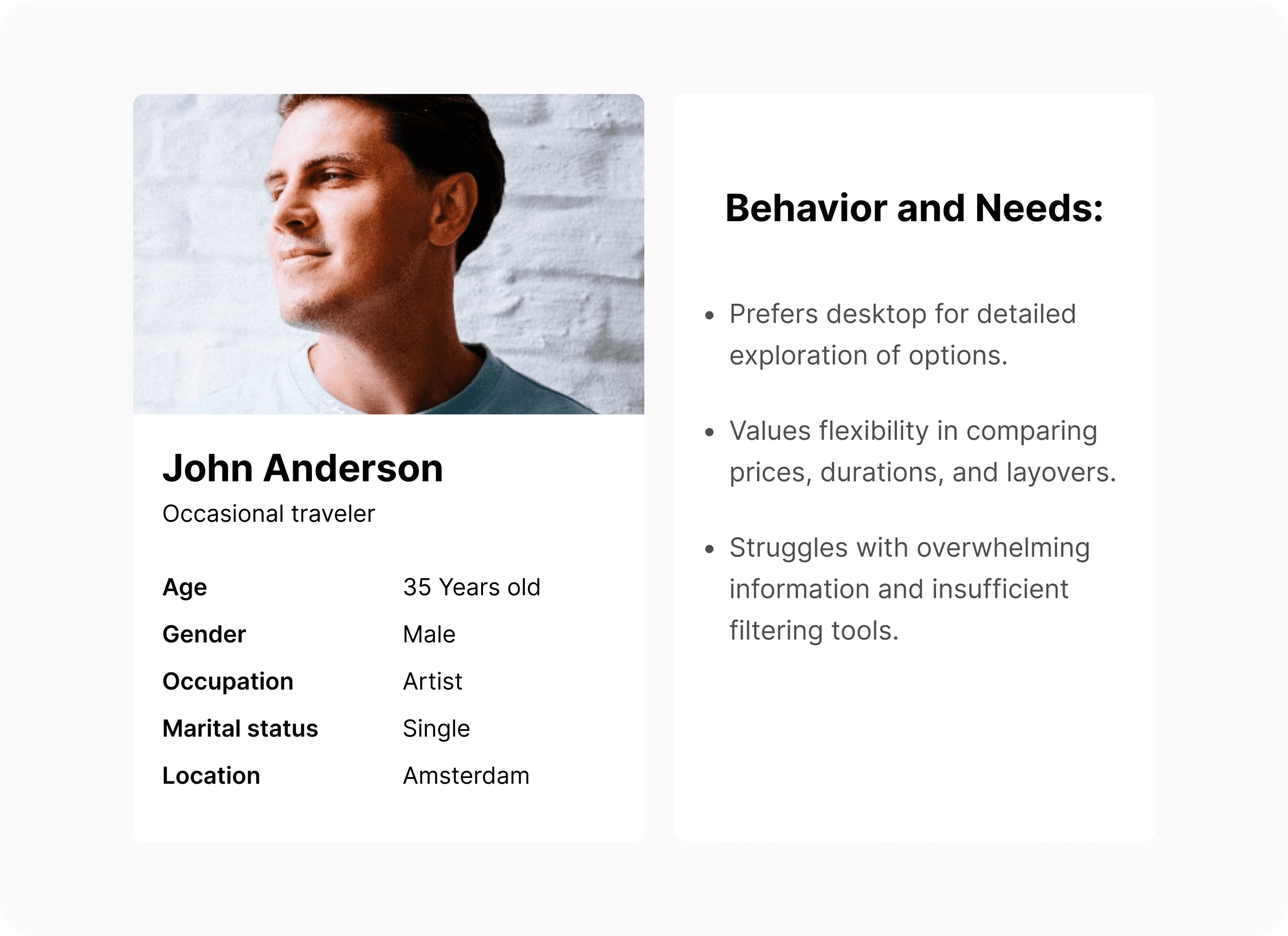
Understanding the target user is crucial for creating effective and user-centric solutions. Personas help represent the key characteristics, behaviors, and needs of the users, providing a clear focus for the design process. By empathizing with users and addressing their pain points, we ensure that our solutions align with real-world challenges and expectations.
Desktop User Persona:
Project Assumptions
Defining assumptions shaping the solution
To proceed with the ideation and solution phases, I made several assumptions based on technical and business constraints. These assumptions guided the development process, and any inaccuracies could affect the outcomes.
The key assumptions include:
It is not technically or aligned with the business model to allow users to first select outbound flights and then return flights separately.
Advertisements on the platform cannot be removed, and their layout cannot be changed.
The filtering system on the backend cannot be modified at this stage.
The task focuses only on desktop users, which is why the solution targets desktop experiences.
The problem has been validated and is confirmed to be accurate.
The persona is assumed to be price-sensitive, prioritizing cost over other factors.
These assumptions were critical in shaping the proposed solutions and ensuring alignment with the given constraints.
Ideation
Generating creative ideas for potential solutions
I focused on generating ideas to find the best solution
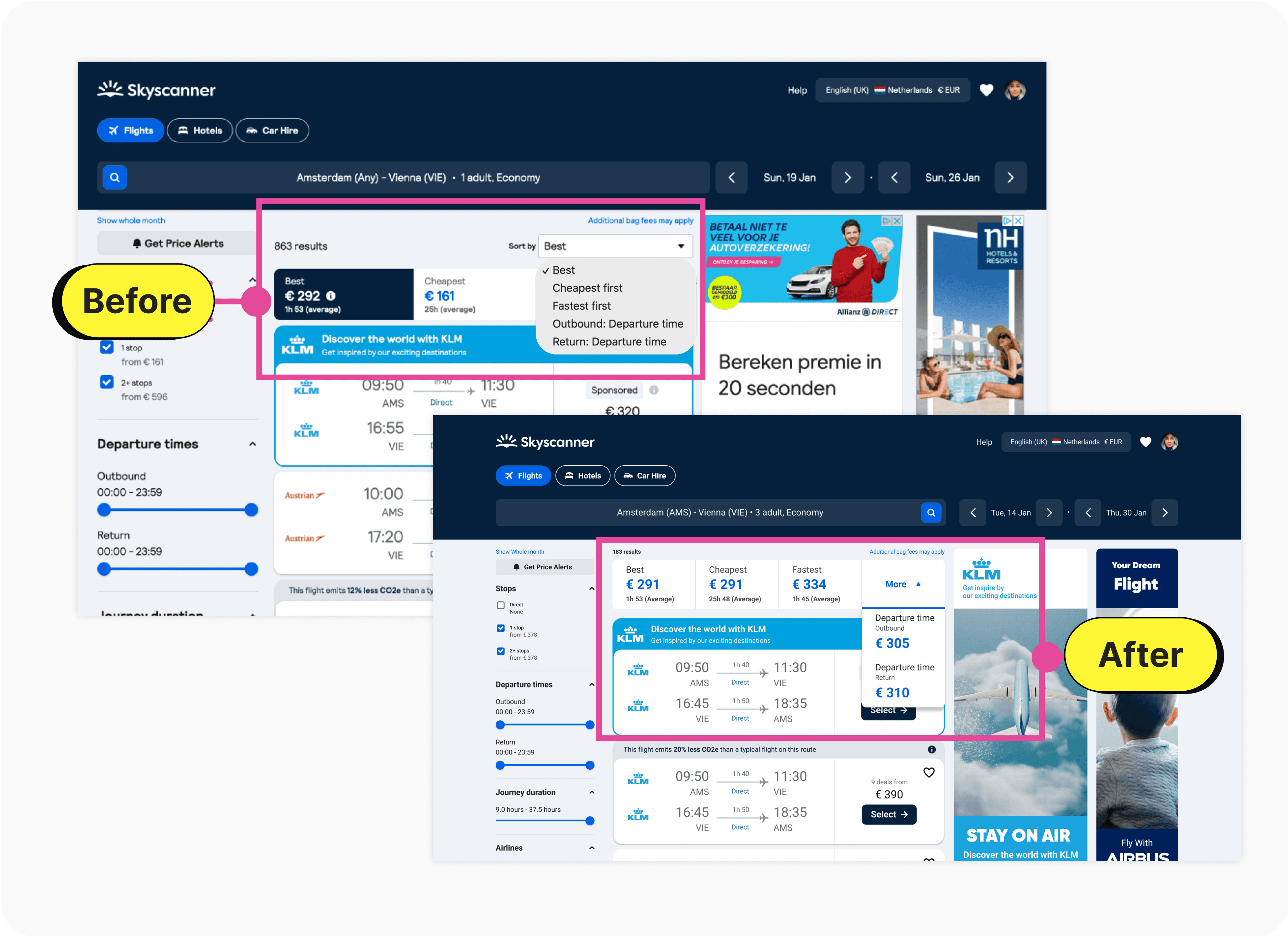
Idea 1: Segmenting Controls for Sorting and Filtering
Current Design Issues:
The sorting control at the top and the filtering section below essentially perform overlapping functions, creating redundancy.
The sorting control takes up additional space while not being effectively utilized.
This duplication leads to inefficiency in space usage and does not enhance the user experience.
Proposed Idea:
Integrate the sorting control at the top with the filtering section below into a single, unified component.
This integration would free up space, allowing for the display of more flight cards and providing a cleaner interface.
Users can filter and sort flights simultaneously, making the experience more intuitive and streamlined.
Strengths:
Reasonable Implementation Time: The integration can be implemented within a practical timeline by the development team.
User Familiarity: The design does not introduce behavioral changes, as users are already familiar with similar systems on this and other platforms.
Enhanced Sorting and Filtering: Users can easily sort and filter flights based on return or departure criteria, aiding in quicker decision-making.
Optimized Space Usage: By consolidating redundant elements, the layout becomes cleaner, allowing more flight options to be displayed without clutter.
Weaknesses:
The level of impact on reducing confusion for users when selecting return flights may be limited.
While it improves usability, the change might not significantly address the problem outlined in the assignment's problem statement.
Why It’s Not the Primary Solution:
This idea enhances usability and optimizes the use of space, making the interface more efficient. However, its overall impact on solving the core problem of confusion in selecting return flights may be limited.
Idea 2: Redesigning Flight Cards for Clarity
Current Design Issues:
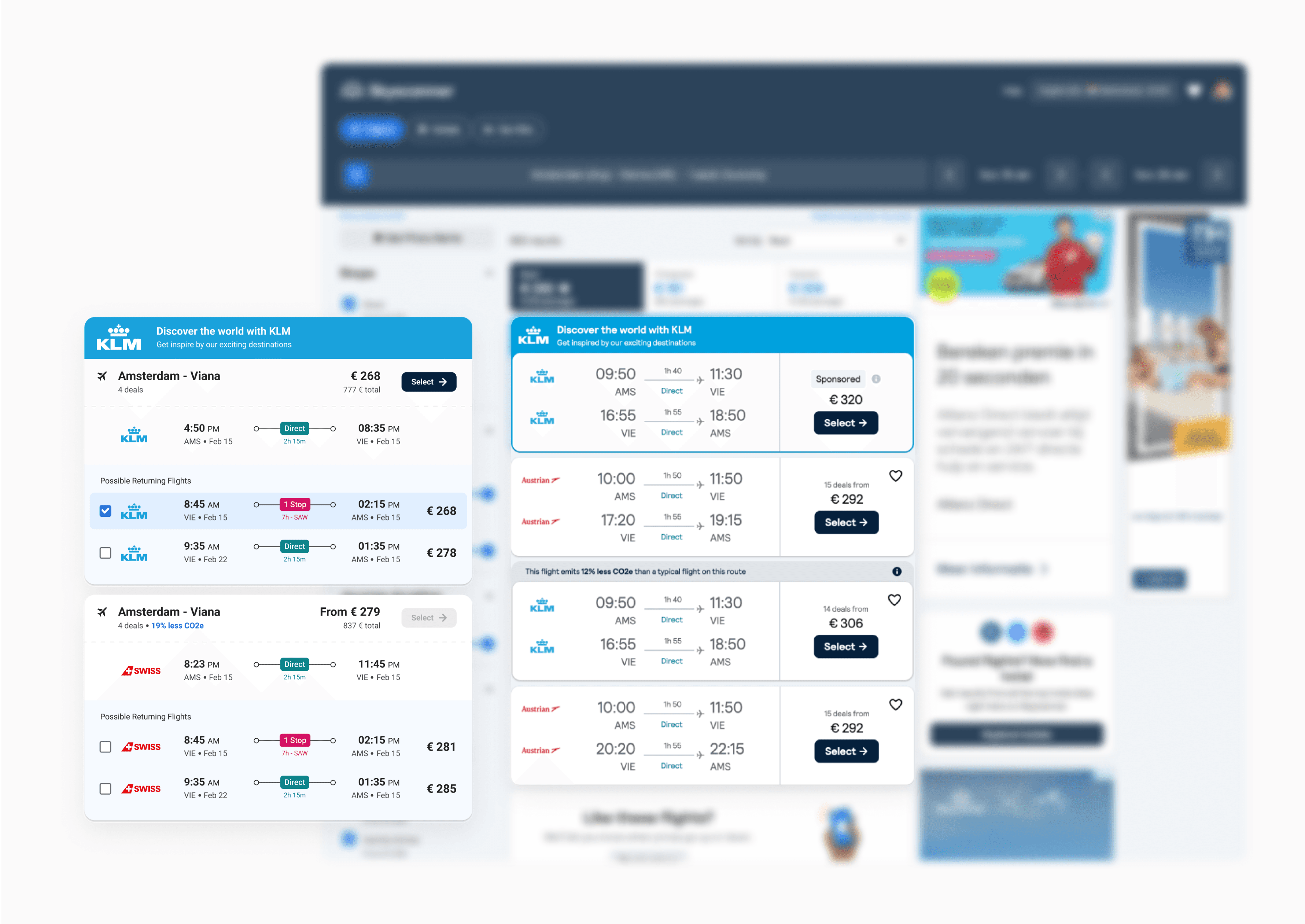
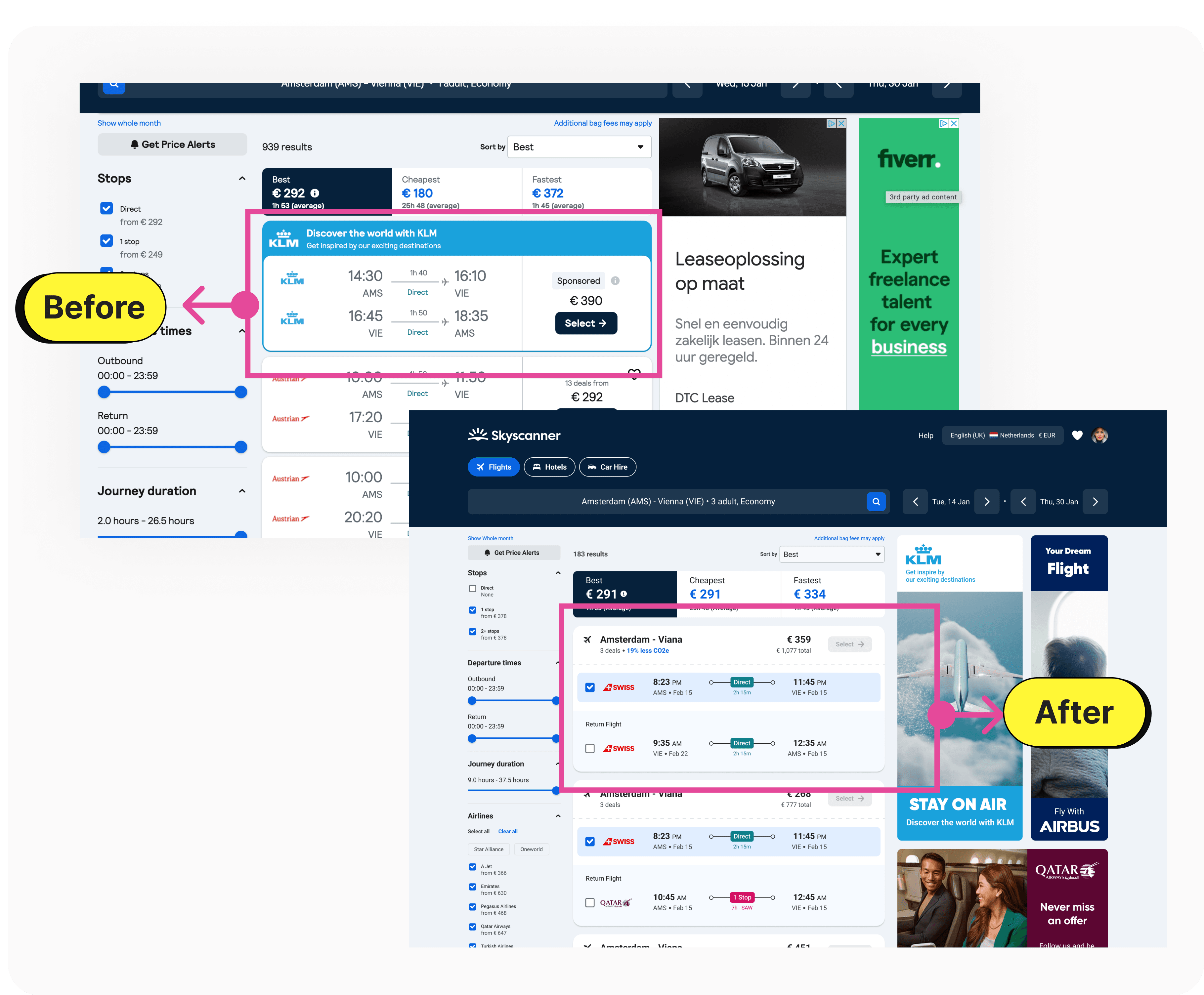
The current design repeatedly displays the same departure flight across multiple cards, with only the return flights varying.
This repetition creates confusion for users, as they struggle to identify the unique differences between cards.
Users cannot easily understand why the same data appears multiple times, leading to frustration and inefficiency.
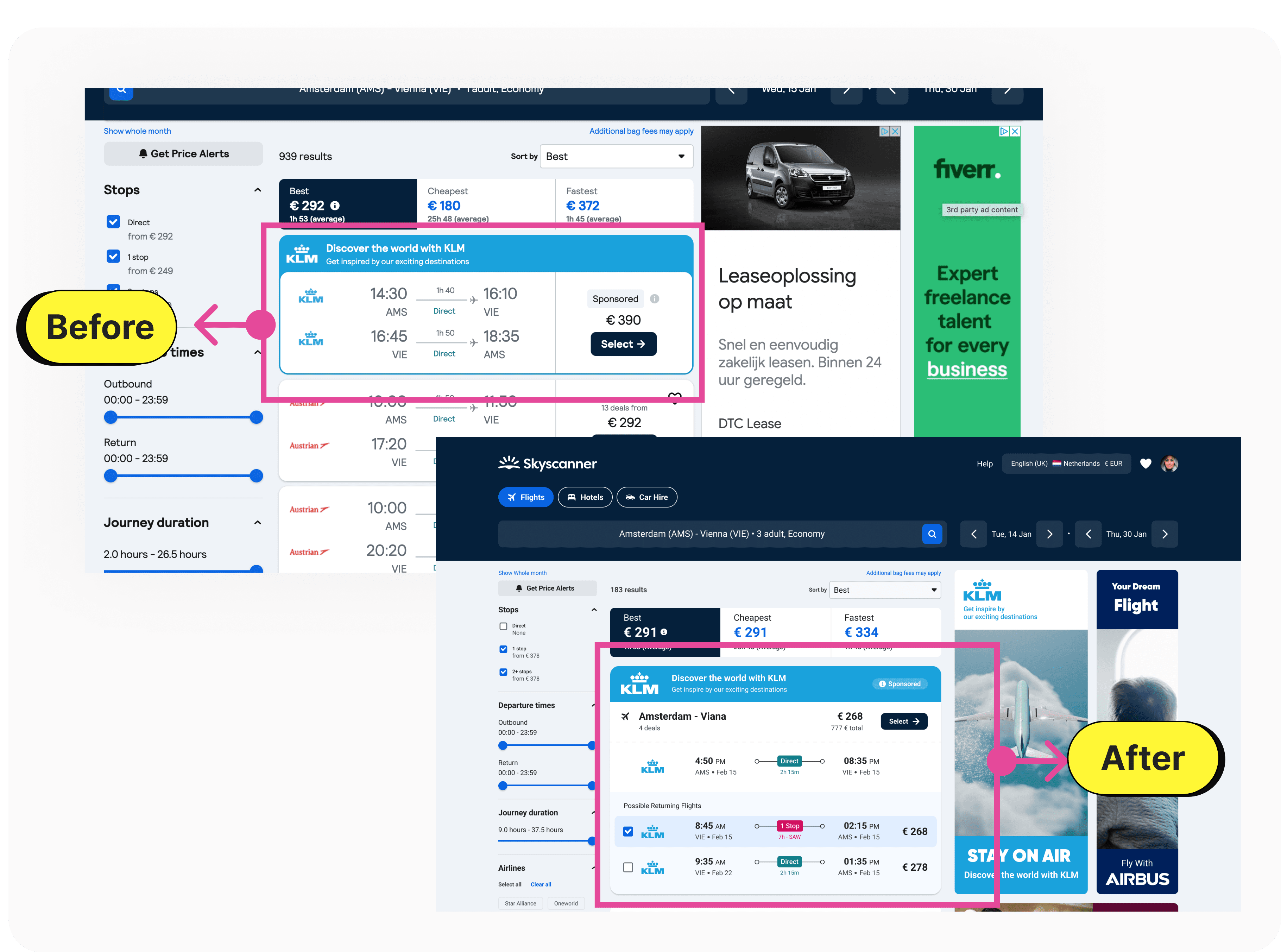
Proposed Idea:
Display the fixed departure flight prominently at the top of the card, separating it from the variable return flight options.
Consolidate all return flight options into a single card, organized by filters such as price, duration, or layover time.
Include a checkbox next to each return flight option, allowing users to select the most suitable return flight while comparing all options side by side.
This idea was inspired by platforms like Kayak and another similar website. However, during personal use, I found their design somewhat confusing at first, though I eventually adapted to it. Based on that experience, I aimed to improve this concept by eliminating repetitive data and organizing return flights in a clearer way.
Strengths:
Creative Solution: This approach introduces a unique way to address user confusion by grouping return flights together for easier comparison.
Reduced Time: Users spend less time searching for suitable return flights since all options are displayed together.
Improved Clarity: Displaying grouped return flights side by side minimizes confusion and aids decision-making.
Optimized Space Usage: By consolidating data, more cards with different departure flights can be displayed, maximizing the use of available space.
Avoids Repetition: Eliminates redundant information, making the interface cleaner and more efficient for users.
Weaknesses:
Resource-Intensive: Redesigning the cards requires more resources and longer development time.
Unproven Design: This specific approach has not been implemented on other platforms, making it experimental and requiring extensive testing.
User Adaptation: Users may initially find this design confusing and need time to adapt to the new way of interacting with flight options.
High Risk: Major changes in high-traffic platforms come with significant risks, especially without sufficient testing and validation.
Testing Required: Extensive testing is necessary to understand how users interact with this design, which adds to the overall timeline and complexity.
Why It’s Not the Primary Solution:
While this idea is innovative and has the potential to reduce user confusion, the limited timeframe did not allow for sufficient testing to validate its effectiveness. It carries high risks and requires more time and resources to ensure it can function as intended. Therefore, this idea is presented as a potential solution that needs further evaluation and refinement before being considered as the primary solution.
Solution
Delivering the Final Solution
Based on the research and the time available, it became clear that this problem is a common challenge for many platforms in the travel industry. Even large and successful platforms have not been able to fully solve it.
This shows that the problem is connected to how flight search systems work.
From examples like Kayak, I propose a solution where users first select their departure flight.
After choosing, the platform shows options for return flights that the user can select.
This solution is not perfect. It might still confuse users and has repetitive data, but it is a realistic choice with the time, resources, and conditions available.
Since platforms like Kayak have used similar features, this approach feels familiar to users and makes sense for the current situation.
Why This Solution?
It follows an approach already tested by successful competitors.
It organizes the process step by step, so users don’t see too many options at once.
Weaknesses:
The redesign takes a lot of resources and development time.
The solution still has repetitive data and is not fully optimized.
User testing is needed to make sure it works well and meets user needs.
Important Note
This solution is not final and must be tested first. User tests will help confirm if it works well or needs changes. Based on the current time, resources, and conditions, this is the most practical solution.
Testing
Validating solutions through user feedback and data
To validate the proposed solutions, I conducted two types of tests:
Pre-Validation Testing:
Prototypes of solution were tested with 5 participants.
Observations revealed usability improvements and areas needing refinement.
Limitations: Small sample size; further testing is needed for broader validation.
Post-Validation Testing:
In a standard three-week timeline:
Collaborate with analytics teams to segment users for A/B testing.
Deploy controlled experiments to measure conversion and drop-off rates.
Iterate designs based on data and user feedback.
Key considerations:
Small changes on high-traffic platforms need careful testing to reduce risks and increase impact.
Background & context
Platform for comparing flights, hotels, and car rentals.
Skyscanner is a leading Online Travel Agency (OTA) and metasearch platform in the travel and tourism industry. It helps users compare prices for flights, hotels, and car rentals, enabling them to find the best options based on their preferences.
With a business model focused on affiliate commissions and advertising, Skyscanner connects travelers to partner websites for seamless bookings.
Its user-centric design and powerful search capabilities make it a trusted tool for millions of travelers worldwide.
Problem Definition
Understanding the key challenges users face
To identify and clearly define the users' problem, I focused on analyzing the problem space thoroughly.
In an ideal scenario with three weeks, my first step would be to organize a meeting with the Product Owner to gather detailed insights into the problem and validate assumptions. This is crucial because misidentifying the problem can lead to wasted resources and ineffective solutions.
To ensure clarity, I utilized the Double Diamond framework to separate the Problem Space from the Solution Space:
Problem statement
Defining the core issue impacting user experience
Approach in Time-Constrained Scenarios
With only three days for this project,
I adapted my approach to focus on the most critical steps:
Analyzed Skyscanner’s website and evaluated the current user experience.
Identified key user challenges:
Issue with departure flight times: Users struggled to differentiate between identical departure times and varying return times.
Issue with sorting: Users had difficulty finding flights based on specific times due to sorting by price.Had I more time, I would include:
Workshops with stakeholders to align on user problems.
User Interviews to validate findings.
Quantitative Data Analysis to identify patterns in user behavior.
Desk Research
Exploring solutions and industry practices.
To gain insights, I conducted research focusing on competitor solutions and industry trends. I divided my research into three categories to gather insights, analyze competitors, and generate ideas:
Direct Competitors (Same Business Model)
These platforms redirect users to airline or ticketing websites for final bookings,
similar to Skyscanner’s metasearch model:
Kayak
Google Flights
Momondo
Direct Competitors (Different Business Models in the Same Industry)
These companies are in the travel industry but may have different business models, such as focusing on travel packages, specialized bookings, or providing unique user experiences:
Booking.com
Hopper.com
Expedia.com
Cross-Industry Inspiration (Within Travel, But Not Flights)
To broaden the perspective and gather inspiration, I explored platforms in the travel industry
that are not focused on flights but face similar challenges in usability and user experience:
NS (Nederlandse Spoorwegen)
Airbnb
Key findings:
Insights from research and analysis.
Platforms offering bundled packages cater to flexible users but can overwhelm those seeking customization.
Simplifying options through visual clarity and better grouping can reduce decision fatigue.
Metrics
Measuring success through user-centric metrics.
To measure success, I defined the following metrics:
Defining clear and measurable metrics is essential to evaluate the effectiveness of the proposed solutions. Metrics help align design improvements with both user needs and business goals, ensuring that changes lead to tangible results.
By focusing on conversion rates, user satisfaction, and engagement, we can determine the success of the redesign and identify areas for further iteration.
Primary Metric:
Viewer-to-Lead Conversion Rate
The Percentage of Viewers Who Convert to LeadsConversion Rate for Return Flight Bookings
The percentage of users completing bookings.
Side Metrics:
Average Time on Page
Indicates whether users find information quickly.User Satisfaction Score
Measures ease of use through post-interaction surveys.Drop-off Rate
Tracks where users abandon the booking process.
Persona
Understanding the target user and their needs.
Understanding the target user is crucial for creating effective and user-centric solutions. Personas help represent the key characteristics, behaviors, and needs of the users, providing a clear focus for the design process. By empathizing with users and addressing their pain points, we ensure that our solutions align with real-world challenges and expectations.
Desktop User Persona:
Project Assumptions
Defining assumptions shaping the solution
To proceed with the ideation and solution phases, I made several assumptions based on technical and business constraints. These assumptions guided the development process, and any inaccuracies could affect the outcomes.
The key assumptions include:
It is not technically or aligned with the business model to allow users to first select outbound flights and then return flights separately.
Advertisements on the platform cannot be removed, and their layout cannot be changed.
The filtering system on the backend cannot be modified at this stage.
The task focuses only on desktop users, which is why the solution targets desktop experiences.
The problem has been validated and is confirmed to be accurate.
The persona is assumed to be price-sensitive, prioritizing cost over other factors.
These assumptions were critical in shaping the proposed solutions and ensuring alignment with the given constraints.
Ideation
Generating creative ideas for potential solutions
I focused on generating ideas to find the best solution
Idea 1: Segmenting Controls for Sorting and Filtering
Current Design Issues:
The sorting control at the top and the filtering section below essentially perform overlapping functions, creating redundancy.
The sorting control takes up additional space while not being effectively utilized.
This duplication leads to inefficiency in space usage and does not enhance the user experience.
Proposed Idea:
Integrate the sorting control at the top with the filtering section below into a single, unified component.
This integration would free up space, allowing for the display of more flight cards and providing a cleaner interface.
Users can filter and sort flights simultaneously, making the experience more intuitive and streamlined.
Strengths:
Reasonable Implementation Time: The integration can be implemented within a practical timeline by the development team.
User Familiarity: The design does not introduce behavioral changes, as users are already familiar with similar systems on this and other platforms.
Enhanced Sorting and Filtering: Users can easily sort and filter flights based on return or departure criteria, aiding in quicker decision-making.
Optimized Space Usage: By consolidating redundant elements, the layout becomes cleaner, allowing more flight options to be displayed without clutter.
Weaknesses:
The level of impact on reducing confusion for users when selecting return flights may be limited.
While it improves usability, the change might not significantly address the problem outlined in the assignment's problem statement.
Why It’s Not the Primary Solution:
This idea enhances usability and optimizes the use of space, making the interface more efficient. However, its overall impact on solving the core problem of confusion in selecting return flights may be limited.
Idea 2: Redesigning Flight Cards for Clarity
Current Design Issues:
The current design repeatedly displays the same departure flight across multiple cards, with only the return flights varying.
This repetition creates confusion for users, as they struggle to identify the unique differences between cards.
Users cannot easily understand why the same data appears multiple times, leading to frustration and inefficiency.
Proposed Idea:
Display the fixed departure flight prominently at the top of the card, separating it from the variable return flight options.
Consolidate all return flight options into a single card, organized by filters such as price, duration, or layover time.
Include a checkbox next to each return flight option, allowing users to select the most suitable return flight while comparing all options side by side.
This idea was inspired by platforms like Kayak and another similar website. However, during personal use, I found their design somewhat confusing at first, though I eventually adapted to it. Based on that experience, I aimed to improve this concept by eliminating repetitive data and organizing return flights in a clearer way.
Strengths:
Creative Solution: This approach introduces a unique way to address user confusion by grouping return flights together for easier comparison.
Reduced Time: Users spend less time searching for suitable return flights since all options are displayed together.
Improved Clarity: Displaying grouped return flights side by side minimizes confusion and aids decision-making.
Optimized Space Usage: By consolidating data, more cards with different departure flights can be displayed, maximizing the use of available space.
Avoids Repetition: Eliminates redundant information, making the interface cleaner and more efficient for users.
Weaknesses:
Resource-Intensive: Redesigning the cards requires more resources and longer development time.
Unproven Design: This specific approach has not been implemented on other platforms, making it experimental and requiring extensive testing.
User Adaptation: Users may initially find this design confusing and need time to adapt to the new way of interacting with flight options.
High Risk: Major changes in high-traffic platforms come with significant risks, especially without sufficient testing and validation.
Testing Required: Extensive testing is necessary to understand how users interact with this design, which adds to the overall timeline and complexity.
Why It’s Not the Primary Solution:
While this idea is innovative and has the potential to reduce user confusion, the limited timeframe did not allow for sufficient testing to validate its effectiveness. It carries high risks and requires more time and resources to ensure it can function as intended. Therefore, this idea is presented as a potential solution that needs further evaluation and refinement before being considered as the primary solution.
Solution
Delivering the Final Solution
Based on the research and the time available, it became clear that this problem is a common challenge for many platforms in the travel industry. Even large and successful platforms have not been able to fully solve it.
This shows that the problem is connected to how flight search systems work.
From examples like Kayak, I propose a solution where users first select their departure flight.
After choosing, the platform shows options for return flights that the user can select.
This solution is not perfect. It might still confuse users and has repetitive data, but it is a realistic choice with the time, resources, and conditions available.
Since platforms like Kayak have used similar features, this approach feels familiar to users and makes sense for the current situation.
Why This Solution?
It follows an approach already tested by successful competitors.
It organizes the process step by step, so users don’t see too many options at once.
Weaknesses:
The redesign takes a lot of resources and development time.
The solution still has repetitive data and is not fully optimized.
User testing is needed to make sure it works well and meets user needs.
Important Note
This solution is not final and must be tested first. User tests will help confirm if it works well or needs changes. Based on the current time, resources, and conditions, this is the most practical solution.
Testing
Validating solutions through user feedback and data
To validate the proposed solutions, I conducted two types of tests:
Pre-Validation Testing:
Prototypes of solution were tested with 5 participants.
Observations revealed usability improvements and areas needing refinement.
Limitations: Small sample size; further testing is needed for broader validation.
Post-Validation Testing:
In a standard three-week timeline:
Collaborate with analytics teams to segment users for A/B testing.
Deploy controlled experiments to measure conversion and drop-off rates.
Iterate designs based on data and user feedback.
Key considerations:
Small changes on high-traffic platforms need careful testing to reduce risks and increase impact.